"Vacating the Floodplain: Urban Property, Engineering, and Floods in Brisbane (1974-2011)"
Margaret Cook exposes the dominant socio-economic and political values that shaped flood management between 1974 and 2011 in Brisbane, Queensland, Australia.
This is the introductory page of the virtual exhibition “Drought, Mud, Filth, and Flood: Water Crises in Australian Cities, 1880s–2010s”—written and curated by Andrea Gaynor et al.
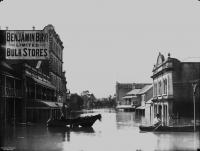
In this chapter of the virtual exhibition “Drought, Mud, Filth, and Flood: Water Crises in Australian Cities, 1880s–2010s,” the authors show how the development of Brisbane, Queensland, on a floodplain rendered the city vulnerable to flood events. Although engineering measures have mitigated floods, this overview highlights the enduring belief in urban “flood-proofing” alongside evidence that it cannot ever be achieved in this context.
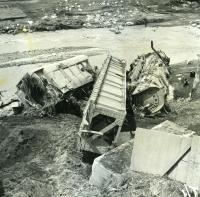
The Tangiwai disaster of 1953, New Zealand’s worst railway accident, is an environmental disaster with an enduring legacy.
This volume explores the potential contribution memory studies can make to policymaking, in particular on conservation and disaster resilience.
Fredriksson et al. discuss the relationship between flood risk management and collective memory.
Colten and Grismore examine the Amite River flood in August 2016 against the backdrop of collective flood memory and public policy.
Parrinello examines historical responses to Italian earthquakes.
Baez Ullberg presents examples of disaster recovery scenarios from Argentina and Sweden.
Simpson explores how both memory and forgetting are central to what happens after disasters.