Globalizing Environmental History—Again
Franz Uekoetter examines the evolution of environmental history in the context of globalization, highlighting its early global focus and the more recent trend towards specialization and nuanced narratives.
Franz Uekoetter examines the evolution of environmental history in the context of globalization, highlighting its early global focus and the more recent trend towards specialization and nuanced narratives.
Cheryl Lousley critiques Beck’s abstract vision of global risk and cosmopolitanism for overlooking power dynamics essential to environmental justice.
In her personal essay “Compressed Cosmopolitanization,” Stefania Gallini’s recounts her feelings of dissonance of joining a reading group focused on risk and Ulrich Beck’s work in safe Munich, while coming from the megalopolis of Bogotá, where risk is a daily reality.
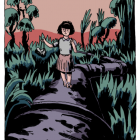
In this episode from the New Books Network podcast, former RCC visiting scholar Thom van Dooren interviewed on his recent book, The Wake of Crows: Living and Dying in Shared Worlds.
In this video, RCC Landhaus Fellow André Felipe Cândido de Silva presents on “The Amazon as a Microcosm of the Anthropocene: Harald Sioli and the Ecological Globalization of the Tropical Rainforest.”
In this episode from the New Books Network podcast, Alison F. Richard is interviewed on her recent book, Sloth Lemur’s Song: Madagascar from the Deep Past to the Uncertain Present.
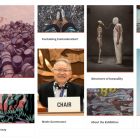
Chapter 3 of the virtual exhibition Toxic Relationships: Uncovering the Worlds of Hazardous Waste.
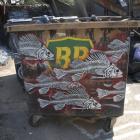
Modern societies’ hazardous by-products cast a dark shadow over the planet. A threat to humans and the environment alike, hazardous waste comes in many guises: discarded batteries, asbestos, giant ships, or tailings from mining operations. While these objects might not seem dangerous at first sight, they have characteristics and components that make them potentially deadly. This virtual exhibition gives you an insight into the obscure world of hazardous waste, its questionable trade across the globe, and the people successfully fighting for safe and just waste management. The Hazardous Travels research team takes you on a journey both into our research and to the edges of our societies that many prefer not to see.
Maximilian Feichtner, Jonas Stuck, Ayushi Dhawan, Christina Lennartz, and Simone M. Müller


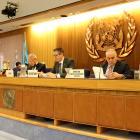
Based on 25 interviews with Australian environmental leaders, the authors assess the value and benefit of the World Heritage Convention and the UNDRIP in relation to Indigenous communities and cosmopolitanism.
This collection of essays maps the heterogeneous and asymmetrical ecologies within which we are enmeshed, a material world that makes the human possible but also offers difficulties and resistance.