“Portrait of an Arctic Research Station”
Flora Mary Bartlett captures the flows between lab and landscape through photographic exploration.
Flora Mary Bartlett captures the flows between lab and landscape through photographic exploration.
A reflection on the use of mixed methods in environmental history.
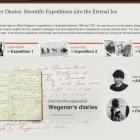
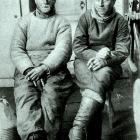
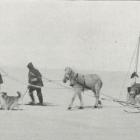
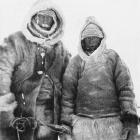
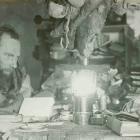
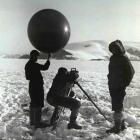
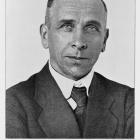
Historian Christian Kehrt presents a short biographical profile of geologist and polar explorer Alfred Wegener, with historic photographs. Wegener’s diaries from his three Greenland expeditions (1906–1931)—digitized, transcribed, and translated—are the focus of this Virtual Exhibition.
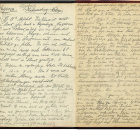
This virtual exhibition sheds light on Alfred Wegener’s expeditions to Greenland between 1906 and 1931. Its main focus is on the diaries Wegener wrote during his explorations, which offer unique insights into the manifold challenges man and material faced in Greenland’s extreme environments. You may choose to read the diaries in their original state, or browse the expeditions individually and read transcribed and translated excerpts by clicking on the individual chapters.
This version, published in 2020, includes minor updates to the original 2013 virtual exhibition. PDFs of the virtual exhibition, as well as original scans and transcripts of the Wegener Diaries, can be found at the exhibition’s PDF Depot.
Christian Kehrt
Commenting actual film footage from Alfred Wegener’s last Greenland expedition, literary historian Dorit Müller describes the content and context of this unique material.
This virtual exhibition sheds light on Alfred Wegener’s expeditions to Greenland between 1906 and 1931. Its main focus is on the diaries Wegener wrote during his explorations, which offer unique insights into the manifold challenges man and material faced in Greenland’s extreme environments. You may choose to read the diaries in their original state, or browse the expeditions individually and read transcribed and translated excerpts by clicking on the individual chapters.
This version, published in 2020, includes minor updates to the original 2013 virtual exhibition. PDFs of the virtual exhibition, as well as original scans and transcripts of the Wegener Diaries, can be found at the exhibition’s PDF Depot.
Christian Kehrt This is a selection of the original diary entries of German explorer Alfred Wegener’s last Greenland expedition in 1930 and is part of the virtual exhibition “The Wegener Diaries: Scientific Expeditions into the Eternal Ice” authored by historian Christian Kehrt.
This virtual exhibition sheds light on Alfred Wegener’s expeditions to Greenland between 1906 and 1931. Its main focus is on the diaries Wegener wrote during his explorations, which offer unique insights into the manifold challenges man and material faced in Greenland’s extreme environments. You may choose to read the diaries in their original state, or browse the expeditions individually and read transcribed and translated excerpts by clicking on the individual chapters.
This version, published in 2020, includes minor updates to the original 2013 virtual exhibition. PDFs of the virtual exhibition, as well as original scans and transcripts of the Wegener Diaries, can be found at the exhibition’s PDF Depot.
Christian Kehrt This is a selection of original diary entries of German explorer Alfred Wegener, who participated in the Danish North Greenland Expedition (1912–1913) and is part of the virtual exhibition “The Wegener Diaries - Scientific Expeditions into the Eternal Ice” authored by historian Christian Kehrt.
This virtual exhibition sheds light on Alfred Wegener’s expeditions to Greenland between 1906 and 1931. Its main focus is on the diaries Wegener wrote during his explorations, which offer unique insights into the manifold challenges man and material faced in Greenland’s extreme environments. You may choose to read the diaries in their original state, or browse the expeditions individually and read transcribed and translated excerpts by clicking on the individual chapters.
This version, published in 2020, includes minor updates to the original 2013 virtual exhibition. PDFs of the virtual exhibition, as well as original scans and transcripts of the Wegener Diaries, can be found at the exhibition’s PDF Depot.
Christian Kehrt This is a selection of original diary entries of German explorer Alfred Wegener, who participated in the “Danmark-Expedition” led by explorer Ludvig Mylius-Erichsen (1872–1907) and is part of the virtual exhibition “The Wegener Diaries - Scientific Expeditions into the Eternal Ice” authored by historian Christian Kehrt.
This virtual exhibition sheds light on Alfred Wegener’s expeditions to Greenland between 1906 and 1931. Its main focus is on the diaries Wegener wrote during his explorations, which offer unique insights into the manifold challenges man and material faced in Greenland’s extreme environments. You may choose to read the diaries in their original state, or browse the expeditions individually and read transcribed and translated excerpts by clicking on the individual chapters.
This version, published in 2020, includes minor updates to the original 2013 virtual exhibition. PDFs of the virtual exhibition, as well as original scans and transcripts of the Wegener Diaries, can be found at the exhibition’s PDF Depot.
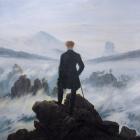
Christian Kehrt In this chapter of her virtual exhibition, “Human-Nature Relations in German Literature,” Sabine Wilke examines mountains and glacial environments in German-language literary descriptions. Whereas the German Romantic poets still highlighted mountainous nature as deeply ambiguous, Goethe’s Faust tried to understand mountainous nature in its materiality through scientific studies. Modernism focuses on the more often destructive results of human-nature entanglements. For the German-language version of this exhibition, click here.
This virtual exhibition features, in English translation, short excerpts from German-language literary texts that address human-nature entanglements. The aim is to show how literature can contribute to understanding and problematizing the relation between humans and nonhuman nature. What aspects of human-nature relations are addressed, at what point in literary history, and how are they shaped poetically? This virtual exhibition is also available in German here.
Sabine Wilke
In this chapter of the German-language version of her virtual exhibition, “Mensch und Natur in der deutschen Literatur (Human-Nature Relations in German Literature),” Sabine Wilke examines mountains and glacial environments in German-language literary descriptions. Whereas the German Romantic poets still highlighted mountainous nature as deeply ambiguous, Goethe’s Faust tried to understand mountainous nature in its materiality through scientific studies. Modernism focuses on the more often destructive results of human-nature entanglements. For the English-language version of this exhibition, click here.
In dieser virtuellen Ausstellung werden kurze Auszüge deutschsprachiger Literatur vorgestellt, die die Verstrickung von Mensch und Natur adressieren. Ziel der Ausstellung ist es, zu zeigen, inwiefern Literatur einen wichtigen Beitrag zum Verständnis und Problematisieren der Beziehung zwischen Mensch und nicht-menschlicher Natur leisten kann. Welche Aspekte dieser Beziehung werden angesprochen, zu welchem Zeitpunkt in der Literaturgeschichte und wie werden diese lyrisch gestaltet? Diese virtuelle Austellung ist hier in englischer Sprache zu finden.
Sabine Wilke Margret Grebowicz argues that James Balog’s Extreme Ice Survey (EIS), in particular the time-lapse films of glaciers receding, presents a unique example of what Guy Debord calls the ”tautological” nature of spectacle, its capacity to serve as its own evidence at the same time as it becomes a mode of relation among people.