Communicating the Climate: From Knowing Change to Changing Knowledge
About this issue
This volume explores the question of whether science should be centered in climate-change communication.
Content
This volume explores the question of whether science should be centered in climate-change communication.
Content
Tabak explores the potential of novels for communicating about climate change.
Matthew Schneider-Mayerson investigates the impact of climate fiction on American readers through a qualitative survey, and assesses the results based on concepts borrowed from ecocriticism, environmental psychology, and environmental communication.
The authors develop “composting” as a metaphor for their two main arguments: that certain feminist concepts and commitments are foundational to the environmental humanities, and that more inclusive feminist composting is necessary for the future of the field.
This article addresses philosophies of becoming by reconsidering Thomas Nagel’s negative view on heterogeneity in his 1974 essay as a form of self-understanding in the context of a shared and heterogeneous world.
Source literature and further reading for Sabine Wilke’s virtual exhibition “Human-Nature Relations in German Literature”. This virtual exhibition is also available in German here.
This virtual exhibition features, in English translation, short excerpts from German-language literary texts that address human-nature entanglements. The aim is to show how literature can contribute to understanding and problematizing the relation between humans and nonhuman nature. What aspects of human-nature relations are addressed, at what point in literary history, and how are they shaped poetically? This virtual exhibition is also available in German here.
Sabine Wilke
Source literature and further reading for Sabine Wilke’s German-language virtual exhibition “Mensch und Natur in der deutschen Literatur (Human-Nature Relations in German Literature)”. For the English-language version of this exhibition, click here.
In dieser virtuellen Ausstellung werden kurze Auszüge deutschsprachiger Literatur vorgestellt, die die Verstrickung von Mensch und Natur adressieren. Ziel der Ausstellung ist es, zu zeigen, inwiefern Literatur einen wichtigen Beitrag zum Verständnis und Problematisieren der Beziehung zwischen Mensch und nicht-menschlicher Natur leisten kann. Welche Aspekte dieser Beziehung werden angesprochen, zu welchem Zeitpunkt in der Literaturgeschichte und wie werden diese lyrisch gestaltet? Diese virtuelle Austellung ist hier in englischer Sprache zu finden.
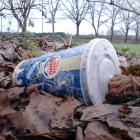
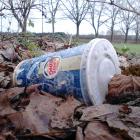
Sabine Wilke Blasi shows how Terrence Malick’s film Badlands (1973) retrospectively illuminates the forces in the 1950s that contributed to present problematic human-nature relations, with attention to Malick’s images of waste and death.
Investigating the natural landscapes and built structures at the Manzanar National Historic Site, the first of ten incarceration camps to open in 1941 and a temporary home for over 11,000 Japanese Americans, Jennifer K. Ladino
develops the notion of affective agency to describe the impacts generated by environments and objects there.
This book explores the development of ecocriticism in the context of Canadian literary studies.