Sugar Town—The Day After
The film tells the story of how a small community and its environment can fall victim to the forces of disaster capitalism.
The film tells the story of how a small community and its environment can fall victim to the forces of disaster capitalism.
The essay presents a brief summary of the development of nuclear power in Germany, arguing that the decision of 2011 was the final step in a long farewell and discusses how the methodological arsenal of the historical profession can shed light on future developments.
Brian Furze explores the importance of environmental awareness in the context of alternative agrarian social relations.
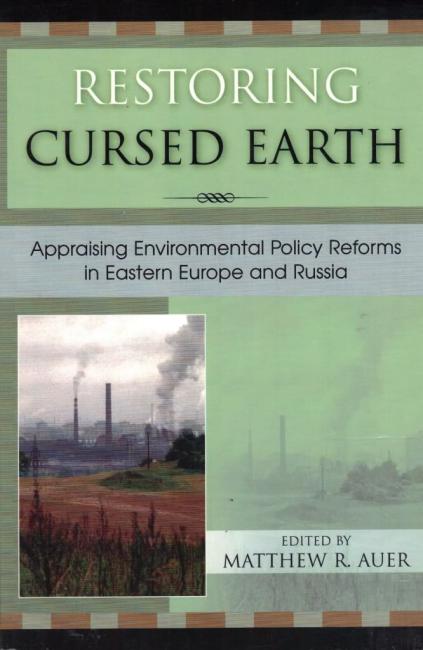
Auer, Matthew R., ed. Restoring Cursed Earth: Appraising Environmental Policy Reforms in Eastern Europe and Russia. Lanham, MD: Rowman & Littlefield, 2004.
Katherine G. Aiken traces Bunker Hill’s evolution from the mine’s discovery in 1885 to the company’s closure in 1981.
In 1993, environmental objections to NAFTA resulted in the establishment of the North American Commission for Environmental Cooperation (CEC), the first international organization created to address issues related to trade and the environment. Surprisingly, however, the CEC has received little scholarly attention, to date. This book is intended to fill that gap by providing a comprehensive analysis of how the organization has fulfilled, or failed to fulfill, its mandates.
This political biography of Wayne Aspinall is an insightful account of the political, financial, and personal variables that affect the course by which water resource legislation is conceived, supported, and implemented—a book that is essential to understanding the history and future of water in the West.
Hal Rothman’s Neon Metropolis is a colorful and absorbing account of Las Vegas’s rise from the desert landscape of the American West to the cutting edge of metropolitan growth and development.
Through a series of ethnographic studies that range from Papua New Guinea to Siberia, Brazil to Namibia, Ethnographies of Conservation argues that the problem is not the disappearance of “pristine nature” or even the land-use practices of uneducated people. Rather, critical attention would be better turned on discourses of “primitiveness” and “pristine nature,” so prevalent within conservation ideology.
Joseph Szarka presents and evaluates environmental policy-making in France at a time when environmental problems are growing in complexity and gravity.