Syllabi in Environment and Society
Short profiles of university and course syllabi, and collaborative syllabi projects on Environment and Society.
Short profiles of university and course syllabi, and collaborative syllabi projects on Environment and Society.
Julia Adaney Thomas argues that climate collapse has fundamentally shifted the focus of historical inquiry from a quest for liberty to the challenge of ensuring survival with ecological decency.
Richard Walker expresses concern over the current state of environmental history, urging it to adopt a more assertive and impactful role in addressing pressing global issues like climate change and species extinction.
Peter Coates analyzes the UK universities’ “impact” criterion, which emphasizes measurable contributions to public policy and the economy, and uses it to highlight the distinctive relevance of environmental history.
Franz Uekoetter examines the evolution of environmental history in the context of globalization, highlighting its early global focus and the more recent trend towards specialization and nuanced narratives.
John R. McNeill emphasizes the need for environmental history to broaden its scope by addressing underexplored regions, eras, and themes.
Patricia Limerick argues that environmental history offers a unique opportunity to address contemporary ecological challenges while revitalizing the historical profession.
Reflections on Amitav Ghosh’s Gun Island by Markus Vogt.
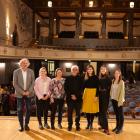
In the fall of 2024, Amitav Ghosh visited the Rachel Carson Center for Environment and Society as part of the project “One Book—Many Worlds: Munich Reads Gun Island by Amitav Ghosh.” This exhibition emerges from the multifaceted discussion of climate change and its challenges conducted in the “One Book—Many Worlds” project and grapples with the question of the role of literary fiction in interdisciplinary academic exchange and climate communication beyond academia. Taking Amitav Ghosh’s recent writings on the global climate crisis, in particular the novel Gun Island, as a vantage point, the chapters in this exhibition engage with various aspects Gun Island from different disciplinary perspectives, drawing on storylines and narrative elements that allow a multifocal engagement with different social and ecological repercussions of climate change. Additionally, pieces from the spring 2025 taumelnd trauen, verschlungen bleiben student exhibition and winning and honorable mentions from the 2025 “Tell the Untold!” writing competition take the provocation to think creatively about the past and future of our environment and world further. Thereby, the exhibition chapters create a web of diverse thoughts on and readings of the role of storytelling for the contemporary interlinked social and environmental crises from a number of perspectives.
About This Exhibition
Reflections on Amitav Ghosh’s Gun Island by Sabina Magagnoli.
In the fall of 2024, Amitav Ghosh visited the Rachel Carson Center for Environment and Society as part of the project “One Book—Many Worlds: Munich Reads Gun Island by Amitav Ghosh.” This exhibition emerges from the multifaceted discussion of climate change and its challenges conducted in the “One Book—Many Worlds” project and grapples with the question of the role of literary fiction in interdisciplinary academic exchange and climate communication beyond academia. Taking Amitav Ghosh’s recent writings on the global climate crisis, in particular the novel Gun Island, as a vantage point, the chapters in this exhibition engage with various aspects Gun Island from different disciplinary perspectives, drawing on storylines and narrative elements that allow a multifocal engagement with different social and ecological repercussions of climate change. Additionally, pieces from the spring 2025 taumelnd trauen, verschlungen bleiben student exhibition and winning and honorable mentions from the 2025 “Tell the Untold!” writing competition take the provocation to think creatively about the past and future of our environment and world further. Thereby, the exhibition chapters create a web of diverse thoughts on and readings of the role of storytelling for the contemporary interlinked social and environmental crises from a number of perspectives.
About This Exhibition
A brief history of the universe from the big bang to the Anthropocene, as related by someone older and wiser than all of it. A fable for clever beasts. A bedtime story for a species.