


Arcadia
Voices of the Peace
The hydroelectric dam “Site C” impacts not only the local environment but also the everyday life of indigenous groups.
The hydroelectric dam “Site C” impacts not only the local environment but also the everyday life of indigenous groups.
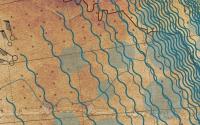
This project looks at the historical intersections between environmental change and migration, and is particularly interested in climate-induced movements of people in the past.
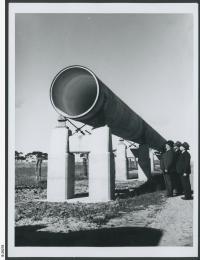
In this chapter of the virtual exhibition “Drought, Mud, Filth, and Flood: Water Crises in Australian Cities, 1880s–2010s,” the authors describe how the city of Adelaide has responded to periodic water shortages. Water security was sought first in reservoirs, then the Murray River, and more recently desalination. While earlier periods of shortage led to the development of the dual-flush toilet, the need for water conservation was only really cemented in the urban consciousness with the Millennium drought of 1996–2010.
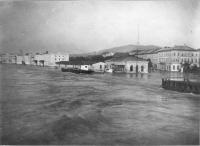
Cholera and typhoid fever did play a role in sanitary reform in Linz/Donau, but cannot be interpreted as the trigger of these reforms.
On Water showcases the range of disciplines and methodological approaches that are brought together at the Rachel Carson Center for Environment and Society. In this volume, nine scholars affiliated with the RCC present their research in the fields of history, philosophy, literary studies, geography, and cultural studies.
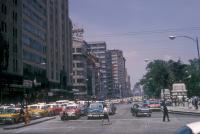
A noxious air forces Mexico City to confront its unwavering urbanizing and industrializing mission in the late twentieth century.
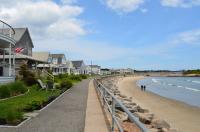
An east-coast beachfront neighborhood faces a difficult decision about how to respond to storms and rising seas.

In this chapter of the virtual exhibition “Drought, Mud, Filth, and Flood: Water Crises in Australian Cities, 1880s–2010s,” the authors show the extent to which the people of Perth, Western Australia, have relied on the groundwater of the Swan Coastal Plain, and the implications of this reliance in a drying climate. In the context of private and public extraction of groundwater, the government in 2014 commenced a groundwater replenishment scheme to “recharge” the local aquifers with treated wastewater.
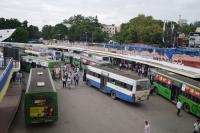
This article investigates the transformation of Bangalore’s Dharmambudhi lake into the central bus terminus.
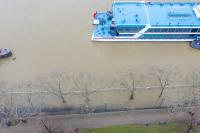
This article presents examples of ancient conceptions of rivers as more-than-human agents and their struggle with humans.