

Exhibition chapter
Using Climate Fiction for Community Engagement: The Role of Narratives and Storytelling | Ghosh in Munich
Reflections on Amitav Ghosh’s Gun Island by Julia Ludewig.
Reflections on Amitav Ghosh’s Gun Island by Julia Ludewig.
Reflections on Amitav Ghosh’s Gun Island by Nakul Heroor.
Sonji Shah’s “The Story of Geology” is a clever take on the “lithic imaginary” in Bjornerud, Jemisin, and Macfarlane, showing how underground worlds can excite new thoughts on what it means to belong to the earth. It was one of the two honorable mentions in the reflective essay category of the RCC environmental writing competition “Tell the Untold!”
Wan Yin Kim Fung’s “What Cannot Be Unearthed” is a sensitively told account that quite literally gives pause to the toxic fallout of nineteenth- and twentieth-century copper mining in eastern Japan. It was one of the two honorable mentions in the nonfiction category of the RCC environmental writing competition “Tell the Untold!”
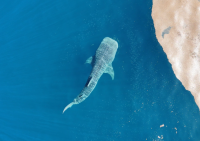
Whale sharks gather each year at Ningaloo Reef, their seasonal appearances drawing intensive human attention, reminding us that the story of the ocean is also our own story.

Introductory notes on the virtual exhibition Amitav Ghosh in Munich.
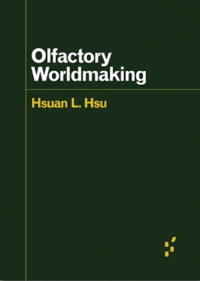
In this book, author and cultural historian Hsu. L. Hsuan investigates olfactory experience to offer new ways of relating, challenging the extractive logics of racial and colonial capitalism.

In this issue of Earth First! “Slugthang” reports on the effort against the extinction of salmon on the Columbia River. In addition, Erik Ryberg discusses civil disobedience, Leslie Lyon stresses the lessons drawn from the Utah Wilderness Battle, and Christi Stevens analyzes the effects of human overpopulation.
In this issue of Earth First! Timothy Bechtold gives an update on the protests against drilling along Montana’s Rocky Mountain Front. Also, Grace Nichols discusses what is to be done about parasitism, and Ursula Aves and Terre Goldman call for attention to the fight against the Canadian utility company Hydro-Quebec.