


Multimedia | journal article
"Are There Any Environmental Rights?"
This paper extends the argument in H.L.A. Hart’s “Are there any natural rights?” to argue that there is an environmental moral right against pollution.
This paper extends the argument in H.L.A. Hart’s “Are there any natural rights?” to argue that there is an environmental moral right against pollution.
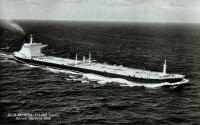
This article explors the 1972 Myrtea oil spill in the Singapore Strait, its environmental impact, and subsequent policy changes.

The Machine upgraded by Dufrayer was able to pump the impressive amount of 20,000 m3 per day but new concern threatened its existence: the Seine waters growing pollution.
This paper examines the relationship between technologies that aim to remediate pollution and moral responsibility. The authors argue that such technologies do not exculpate polluters of responsibility.
While some have argued that, in democratic societies, people simply have a right to a participatory role, others base arguments for public participation on the idea that lay people may have access to knowledge which is unknown to officially sanctioned experts. This paper reports on a novel empirical approach called “participatory modelling” to analyse and capture such “lay” understandings.
On Water showcases the range of disciplines and methodological approaches that are brought together at the Rachel Carson Center for Environment and Society. In this volume, nine scholars affiliated with the RCC present their research in the fields of history, philosophy, literary studies, geography, and cultural studies.

The killing of possums as “pests” is framed as a caring relationship towards Aotearoa/New Zealand’s natural environment.
Wan Yin Kim Fung’s “What Cannot Be Unearthed” is a sensitively told account that quite literally gives pause to the toxic fallout of nineteenth- and twentieth-century copper mining in eastern Japan. It was one of the two honorable mentions in the nonfiction category of the RCC environmental writing competition “Tell the Untold!”
This article investigates the 1974 Nordic Environmental Protection Convention and reveals aspects not previously discussed.

The 1831 cholera riot in St. Petersburg was an extreme result of the city’s immense water pollution problem and led to social conflict between the educated classes and the poor people.