Earth First! Journal 22, no. 3
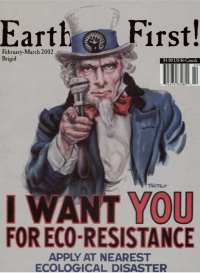
In Earth First! Journal 22, no. 3 George Sexton recommends not to buy the Northwest Forest pass, Cat Hemlock reflects on the UK’s new Terrorism Bill, and john johnson reports on neoliberalism in the American South.
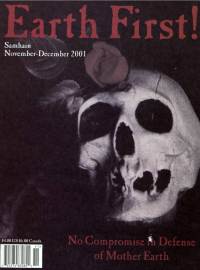
Earth First! Journal 22, no. 2 features essays on the Gorleben nuke protest, insects as sustainable food, an analysis of the events of 9.11, and Afghanistan wildlife.
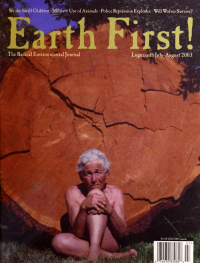
This issue of Earth First! Journal features various visions of war and peace. In addition, Alicia Littletree and Strongwood give an update on the bombing of Judi Bari and their fight against the FBI, Tjalve Torstjener calls for attention to how paper company Norske Skog kills 1000 species in Norway, and Larry Lohmann discusses racism.
This is Chapter 5 of the exhibition “Rachel Carson’s Silent Spring: A book that changed the world” by historian Mark Stoll.
This is Chapter 10 of the exhibition “Rachel Carson’s Silent Spring: A book that changed the world” by historian Mark Stoll.
In Earth First! 23, no. 5 features articles on the strength of vulnerability, the Bush administration’s stand on endangered species, issues of global food security, and worldwide corporate conventions and how to challenge them.
Third chapter of Stephen Milder et al.’s virtual exhibition, Petra Kelly: Life and Legacy of a Transnational Green Activist.
This is a chapter of the virtual exhibition “Famines in Late Nineteenth-Century India: Politics, Culture, and Environmental Justice”—written and curated by sociologist Naresh Chandra Sourabh and economic historian Timo Myllyntaus.
This is Chapter 7 of the exhibition “Rachel Carson’s Silent Spring: A book that changed the world” by historian Mark Stoll.
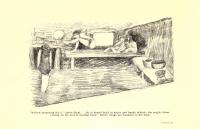
British Arctic explorers lacked local knowledge of the environments through which they passed and sometimes consulted Inuit shamans, whose geographical knowledge was known to be extensive. One expedition to seek the Northwest Passage exemplifies how they supplemented their deficit with indigenous environmental knowledge.