


Arcadia
The Fen River in Taiyuan, China: Ecology, Revitalization, and Urban Culture
This case study reflects China’s environmental governance as a constantly evolving structure within the “environment-politics-society” nexus.
This case study reflects China’s environmental governance as a constantly evolving structure within the “environment-politics-society” nexus.
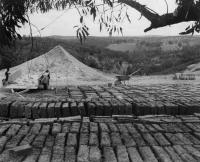
Environmental building in Australia as a form of communing with nature.

The Machine upgraded by Dufrayer was able to pump the impressive amount of 20,000 m3 per day but new concern threatened its existence: the Seine waters growing pollution.
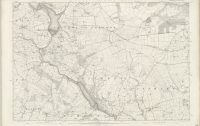
Water management can have profound effects upon the landscape.
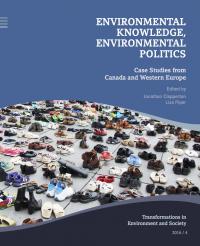
These essays showcase examples from Canada and Western Europe, offering insights into how different forms of environmental knowledge and environmental politics come to be seen as legitimate or illegitimate.
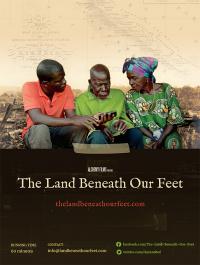
This film follows a young Liberian who returns to his post-war country with film footage which has the potential to push radical land reforms for sustainable community development.

The day-to-day experiences of the men who developed and tested the British nuclear deterrent on Christmas Island from 1956–1958.
Clapperton evaluates three existing frameworks for understanding Indigenous and non-Indigenous claims to know the environment. While each framework has its strengths, they reinforce a binary between Indigenous and non-Indigenous knowledge and keep salvage paradigms of Indigenous knowledge alive. Clapperton calls for an enlarged definition of Indigenous knowledge that could account for boundary-crossing and Indigenous people “doing” science.
Longley traces how geographic and cartographic knowledge of the Athabasca region, Alberta, Canada, colonized the region in the southern imagination long before the oil sands industry began extraction there. The practices of exploration, surveying, and documentation mapped the Athabasca region in terms of its rich bitumen deposits, obscuring the histories of Indigenous people. The south gained political and economic control of the region, although this process is incomplete and contested.
Sandlos and Keeling explore Indigenous resistance to arsenic pollution. Indigenous communities mobilized knowledge around environmental pollution and its health impacts. The authors show how this resistance to environmental racism is connected to other Indigenous struggles over industrial development and to issues such as land claims, sovereignty, and colonial dispossession.