

Multimedia | book, full-text
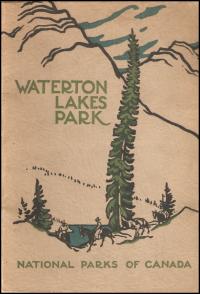
Waterton Lakes National Park
Focusing on the southern Alberta Park that shares a border with Montana’s Glacier National Park, this travel guide, written by Mabel Bertha Williams, is from around 1927.
Focusing on the southern Alberta Park that shares a border with Montana’s Glacier National Park, this travel guide, written by Mabel Bertha Williams, is from around 1927.
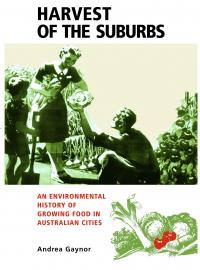
Drawing on sources ranging from gardening books and magazines to statistics and oral history, Andrea Gaynor’s book challenges some of the widespread myths about food production in Australian cities and traces the reasons for its enduring popularity.
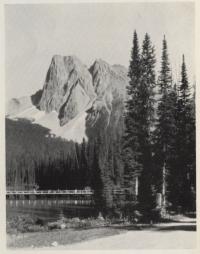
The 1936 Guardians of the Wild, the first book written by M. B. Williams, is also the first history of the Canadian national parks system. It was written and published in Great Britain, and Williams never mentions her own part in that history.
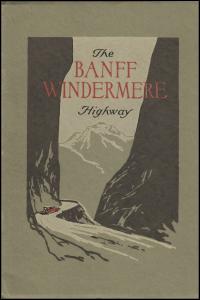
This 1924 travel guide, written by Mabel Berta Williams, is a compact, well-photographed guide to the new highway that vastly improved automobile travel in the Rocky Mountain parks.
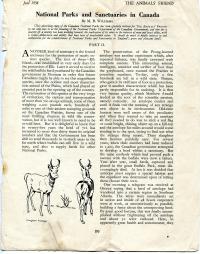
This 1936 article by M. B. Williams is for England’s The Animals’ Friend magazine and aims to kindle interest in and enthusiasm for the establishment of national parks and sanctuaries in England.

The Nordic Network for Interdisciplinary Environmental Studies (NIES) promotes interdisciplinary environmental studies, especially work in the environmental humanities. The network is supported by NordForsk, and is based in Sweden, Denmark, Norway, Finland, and Iceland.

In episode 61 of Nature’s Past, a podcast on Canadian environmental history, Sean Kheraj interviews four North American graduate students on why they study environmental history.
The aim of the Humanities for the Environment Observatories (HfE) is to identify, explore, and demonstrate the contributions that humanistic and artistic disciplines make to solving global social and environmental challenges.
Data Refuge is a community-driven, collaborative project to preserve public climate and environmental data. When we document the many ways diverse communities use data, we can also advocate for future data.
Owain Jones, a Professor of Environmental Humanities at Bath Spa University, offers ideas and resources about environmental humanities in this blog.