Green City Promises and "Just Sustainabilities"
Vanesa Castán Broto critiques sustainable development agendas that approach green cities as merely engines of economic growth.
Alternative Futures brings together 35 essays on India’s future, written by a diverse set of authors: activists, researchers, media persons, those who have influenced policies, and those working at the grassroots. Divided into four sections—Ecological Futures, Political Futures, Economic Futures, and Socio-Cultural Futures—the book covers a wide range of issues including environmental governance, biodiversity, democracy and power, law, agriculture, pastoralism, industry, languages, learning and education, knowledge, health and sexuality among others.
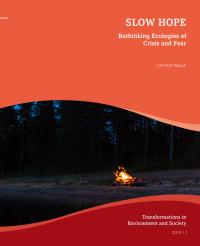
This essay explores the possibility of “slow hope” for positive environmental change.
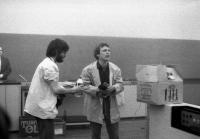
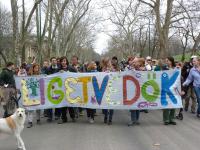
In 1969, the Danish environmental organization NOAH is established, following a spectacular happening at the University of Copenhagen.
The second episode of the Crosscurrents podcast series focuses on how the Civic Laboratory for Environmental Action Research (CLEAR) approaches issues of social justice and equity in their research.
In this chapter from the virtual exhibition “Global Environments: A 360º Visual Journey,” Sarah Elizabeth Yoho’s 360° video captures the process of constructing a dry stone wall in Italy’s Cinque Terre. In cooperation with community organization Tu Quoque Vernazza, it was filmed over nine days and is shown in time-lapse. The camera captures the grapevine’s point of view of Cinque Terre life.
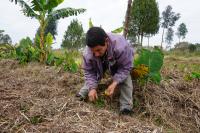
In this chapter from the virtual exhibition “Global Environments: A 360º Visual Journey,” Claire Lagier’s 360º video shows six-year-old agroforestry projects in a land reform settlement in the state of Paraná, Brazil. Her research focuses on agroecological rural social movements in this region.
Manifesto for Living in the Anthropocene argues that the current climate crisis calls for new ways of thinking and producing knowledge, suggesting that our collective inclination has been to go on in an experimental and exploratory mode, in which we refuse to foreclose on options or jump too quickly to “solutions.”
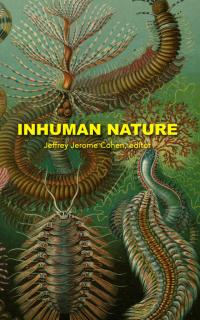
This collection of essays maps the heterogeneous and asymmetrical ecologies within which we are enmeshed, a material world that makes the human possible but also offers difficulties and resistance.
This article analyzes the recent controversial environmental history of urban parks in Istanbul, Turkey, and Budapest, Hungary, under authoritarian regimes.