

Multimedia | book profile
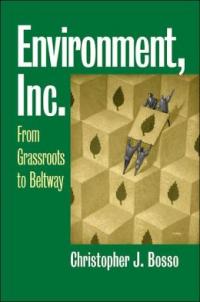
Environment, Inc.: From Grassroots to Beltway
Christopher Bosso considers how organizations that once contested the Establishment have become an establishment of their own.
Christopher Bosso considers how organizations that once contested the Establishment have become an establishment of their own.
Alex Lockwood tries to measure the importance of Rachel Carson’s work in its affective influence on contemporary environmental writing across the humanities.
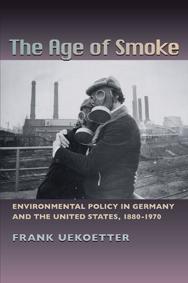
A comparative history of environmental policy development in Germany and the United States from 1880 to 1970, and the rise of civic activism to combat air pollution.
Chris Rose discusses Greenpeace UK in relation to public awareness of environmental problems.

A narrative of natural progression for environmentalism, from modest beginnings to a global force with the promise of a more sustainable future, is unconvincing in the early twenty-first century. In this issue of RCC Perspectives, Frank Uekoetter discusses the position of the environmental movement in society.
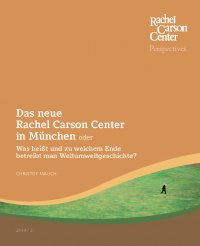
This essay is adapted from a lecture given by Rachel Carson Center director Christof Mauch at the Center for Advanced Studies (CAS) of LMU Munich, as a prelude to a series of public lectures and colloquia held by the Carson Center.

Greenpeace pioneer Bob Hunter was heavily influenced by Native American mythology and thus created the image of Greenpeace activists as “Rainbow Warriors.”

Nalini Nadkarni explores the rich, vital world found in the tops of trees and communicates what she finds to non-scientists.
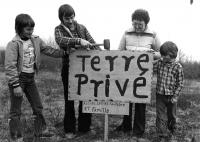
The creation of Kouchibouguac National Park along Canada’s Atlantic coast in the province of New Brunswick came at the cost of removing 1,200 residents from their lands.

In this essay (updated in 2019), Bron Taylor offers background about the events that gave rise to the Earth First! movement and reviews some of the watershed moments in its history, including its print publications.