


Show search results for

Multimedia | film profile
Wrenched
Wrenched captures the passing of the monkey wrench from the pioneers of eco-activism to the new generation who carries Edward Abbey’s legacy into the 21st century. The fight continues to bring awareness to the need for protection of the last bastion of the American wilderness - the spirit of the West.

Exhibition chapter
Introduction to the Exhibition | Human-Nature Relations in German Literature: A Curated Stroll
This virtual exhibition features, in English translation, short excerpts from German-language literary texts that address human-nature entanglements. The aim is to show how literature can contribute to understanding and problematizing the relation between humans and nonhuman nature. What aspects of human-nature relations are addressed, at what point in literary history, and how are they shaped poetically? For the German-language version of this exhibition, click here.
Perspectives
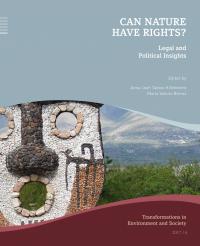
Can Nature Have Rights? Legal and Political Insights
The authors of this volume explore the potential value and challenges of the Rights of Nature concept by examining legal theory, politics, and recent case studies.
Arcadia
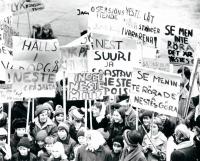
The Neste War 1970–1972: The First Victory of the Budding Finnish Environmental Movement
This article studies the “Neste war,” 1970–1972, the first major victory of the environmental movement in Finland.

Multimedia | journal article
"The Tragedy of Limitless Growth: Re-Interpreting the Tragedy of the Commons for a Century of Climate Change"
Matthew MacLellan argues that Garrett Hardin’s primary object of critique in his influential “The Tragedy of the Commons” is not the commons or shared property at all—as is almost universally assumed by Hardin’s critics—but is rather Adam Smith’s theory of markets and its viability for protecting scarce resources.
Multimedia | journal article
"Fifty Shades of Green"
In this Special Commentary Section titled “Replies to An Ecomodernist Manifesto,” edited by Eileen Crist and Thom Van Dooren, Bruno Latour explores the political import of the notion of “ecomodernism.”
Multimedia | journal article
"The Moderns' Amnesia in Two Registers"
In this Special Commentary Section titled “Replies to An Ecomodernist Manifesto,” edited by Eileen Crist and Thom Van Dooren, Rosemary-Claire Collard, Jessica Dempsey, and Juanita Sundberg critique the manifesto as fostering amnesia: amnesia about the uneven and violent nature of modernization as well as about the struggles that have underpinned efforts to alleviate inequality and violence.
Multimedia | journal article
"The Theodicy of the “Good Anthropocene”
In this special commentary section titled “Replies to An Ecomodernist Manifesto,” edited by Eileen Crist and Thom Van Dooren, Clive Hamilton examines Erle Ellis’ ‘good Anthropocene,’ an unlikely juxtaposition which has now been amplified into the idea of the “great Anthropocene” and set out in An Ecomodernist Manifesto.
Multimedia | journal article
"Getting Hitched and Unhitched with the Ecomodernists"
In this Special Commentary Section titled “Replies to An Ecomodernist Manifesto,” edited by Eileen Crist and Thom Van Dooren, Bronislaw Szerszynski examines ecomodernism through the metaphor of “conscious uncoupling,” suggested in an essay by Habib Sadeghi and Sherry Sami.