“Is This a Society of Humans or of Dogs?”: The Issue of Roaming Dogs in Nineteenth-Century Athens
In Athens, 1886, an unprecedented debate took place concerning the poisoning of roaming dogs.
Beginning in 2013, reindeer on South Georgia—originally brought to the island by whalers in 1911—were eradicated in order to safeguard local biodiversity.
This website is a public history project and a companion to the book Defending the Arctic Refuge by Finis Dunaway.
In this episode from the New Books Network podcast, former RCC visiting scholar Thom van Dooren interviewed on his recent book, The Wake of Crows: Living and Dying in Shared Worlds.
Through exploring virology research and its dangers in post-Ebola Guinea, this article argues that the hypothesis of a bat reservoir has taken on a heuristic role that can be compared to the way that a fetish polarizes relations between the people who manipulate and fear this idea.
This manuscript adopts an interspecies perspective on the One Health laboratory and argues that scientific care for sampled bats may cement hierarchies, with consequences for samplers and animals.
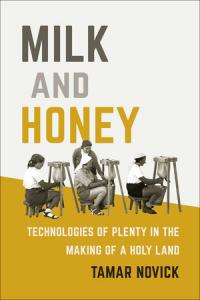
Full text of Tamar Novick’s Milk and Honey, a environmental history of the state that centers on the intersection of technology and religion in modern Palestine/Israel.
Lunchtime Colloquium at the Rachel Carson Center with Sandra Swart.
This essay examines how military, technology, and nature converge in the Israeli griffon vulture project and what politics stand behind it.
This essay brings previously underexplored paths of political ecology, environmental history, and even biosemiotics and plant neurophysiology in Italo Calvino’s The Baron in the Trees (1957) to light.