

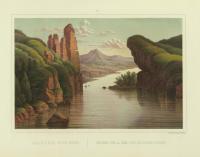
Arcadia
To Dig a Well (in Siberia)
In 1947, inhabitants of Yakutsk gained access to potable groundwater from below the permafrost layer for the first time.
In 1947, inhabitants of Yakutsk gained access to potable groundwater from below the permafrost layer for the first time.

This essay explores the progression of theoretical models and empirical research linked to the understanding of the capacity of forested systems to regulate the hydrological regimes of a given area.

Michael Marder interprets the “toxic flood” we are living or dying through as a global dump. On his reading, multiple levels of existence—from the psychic to the physiological, from the environmental-elemental to the planetary—are being converted into a dump, a massive and still growing hodgepodge of industrial and consumer by-products and emissions; shards of metaphysical ideas and theological dreams; radioactive materials; light, sound, and other modes of sensory pollution; pesticides and herbicides; and so forth.
Owain Jones, a Professor of Environmental Humanities at Bath Spa University, offers ideas and resources about environmental humanities in this blog.
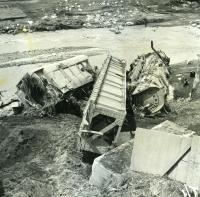
The Tangiwai disaster of 1953, New Zealand’s worst railway accident, is an environmental disaster with an enduring legacy.
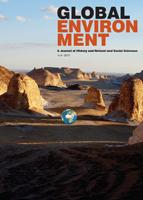
This article seeks to shed light on some of the many possible interactions between changes in rainfall regime, one of the climatic factors with the greatest bearing on the history of human society, and the economic and socio-environmental dynamics of Costa Rica.

The full book by RCC alumna Katrin Kleemann.
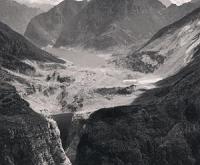
On October 9, 1963, a landslide above the Vajont Dam created a wave that destroyed several villages in the valley, killing about 2,000 people. Opinion as to whether to interpret the disaster as natural or one caused by human error remains divided.


The Eldgjá eruption in Iceland in the late 930s CE seems to have had tremendous repercussions. Only a few historical documents were written during the time in question.