

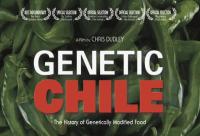
Multimedia | film profile
Genetic Chile
This film uses the New Mexico chile pepper to investigate genetically modified foods and criticizes the practices of the companies involved.
This film uses the New Mexico chile pepper to investigate genetically modified foods and criticizes the practices of the companies involved.
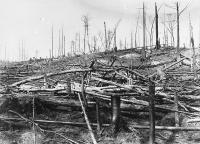
At the 1873 annual meeting of AAAS, Franklin B. Hough argued for protection of America’s forests and conducted the first national investigation of wildland fire.
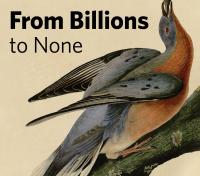
This film examines the rapid extinction of the passenger pigeon by 1914, its lessons for the future, and plans from the “de-extinction” movement to reverse the event using genetic science.
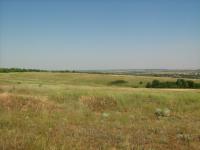
This Arcadia article is about how camels used, until recently, to be a central feature of the steppe landscape of Southern Ukraine.
McAfee examines the changing roles of scientists and politicians in the decision-making processes that affect the environment.
Powerless Science? looks at complex historical, social, and political dynamics, made up of public controversies, environmental and health crises, economic interests, and political responses, and demonstrates how and to what extent scientific knowledge about toxicants has been caught between scientific, economic, and political imperatives.
Managing the Unknown offers essays that show that deficient knowledge is a far more pervasive challenge in resource history than conventional readings suggest. Furthermore, environmental ignorance does not inevitably shrink with the march of scientific progress. This volume combines insights from different continents as well as the seas in between and thus sketches outlines of an emerging global resource history.
The history of the Swiss National Park is told for the first time in Creating Wilderness. The deliberate reinterpretation of the American idea of the national park, as implemented in Yellowstone, was innovative and radical, but its consequences were not limited to Switzerland. The Swiss park became the prime example of a “scientific national park,” thereby influencing the course of national parks worldwide.
This article seeks to shed light on some of the many possible interactions between changes in rainfall regime, one of the climatic factors with the greatest bearing on the history of human society, and the economic and socio-environmental dynamics of Costa Rica.
The authors seek to ascertain if ASEAN can respond to regional human-induced environmental problems given existing problems of national sovereignty and the interest-based character of ASEAN-type associations, since ASEAN’s goal, in contrast to that of the EU, has been regional cooperation rather than regional integration. The aim is to highlight the status of the respective policy frameworks and exemplify areas in which the regions can learn from one another in the field of air pollution, given its global relevance for climate change.