

Multimedia | interviews and talks
Jackson, Jeremy, “How We Wrecked the Ocean”
A leader in the study of the ecology and evolution of marine organisms, Jeremy Jackson is known for his deep understanding of geological time.
A leader in the study of the ecology and evolution of marine organisms, Jeremy Jackson is known for his deep understanding of geological time.

Nalini Nadkarni explores the rich, vital world found in the tops of trees and communicates what she finds to non-scientists.
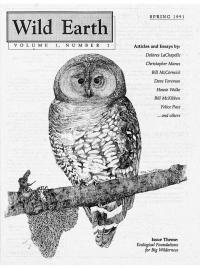
Wild Earth 1, no. 1, with the theme “Ecological Foundations for Big Wilderness,” discusses ecosystem restoration in Florida, corridors in the Klamath Mountains, and a Yellowstone ecosystem Marshall Plan.
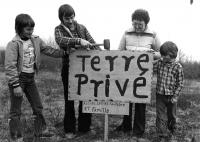
The creation of Kouchibouguac National Park along Canada’s Atlantic coast in the province of New Brunswick came at the cost of removing 1,200 residents from their lands.
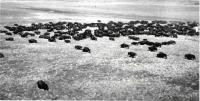
The Canadian government established the Wood Buffalo National Park in 1922 to protect a remnant herd of wood bison. The park has become North America’s biggest national park and is still home to the largest free-roaming herd of wood bison. However, the park’s wildlife has also been subject to some of the most intrusive and ill-conceived management interventions in Canadian history.

In April 1979, the European Communities (EC) adopted the Council Directive on the Conservation of Wild Birds (79/409/EEC), the so-called “Birds Directive.”
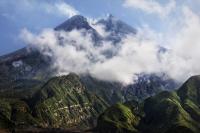
In 2004, the government of Indonesia declared Mount Merapi to be the nation’s thirty-ninth national park. However, since the mountain is a key feature of the sacred landscape of central Java, the creation of Merapi National Park was greeted with widespread protests from the villagers and farmers.
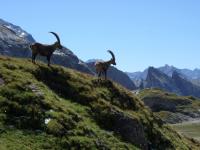
The Vanoise National Park was created in 1963 in the northern French Alps, along with numerous large ski resorts. Born as twins, the park and the resorts grew up at best as strangers, at worst as foes.
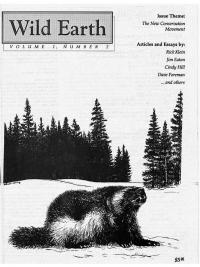
Wild Earth 1, no. 2, with the issue theme “The New Conservation Movement,” on reforming the Sierra Club, grizzly hunting in Montana, and an Ancient Forest Reserve proposal for the Mendocino National Forest.

Wild Earth 1, no. 3 with essays on hydro development in North America, trans-boundary ecosystem preservation, the central Appalachian wilderness, and the need for deep ecological language.