“Being Nature in the Digital Age: Digital Technology, Nature, and Self-Identity”
In this video, RCC Landhaus Fellow Melusine Martin presents on “Being Nature in the Digital Age: Digital Technology, Nature, and Self-Identity.”
This book chapter examines the 1975 Nordic Council conference at Frostavallen in Sweden as a transnational media event which specifically sought to articulate a green modernity to the outside world.
Hsuan Hsu’s Air Conditioning explores questions about culture, ethics, ecology, and social justice raised by the history and uneven distribution of climate controlling technologies.
In the fifth episode of Archival Ecologies, Jayme Collins meets Richard Forrest, steward of the Lytton Museum and Archives, to talk about the devastating losses sustained by the municipal repository through the Lytton fire and to contemplate the futures of collections in digitized records and photographs, and 3-D printed copies of objects.
In this Smart Forests Radio episode, Dr. Frank Vorhies explores the economic aspects of conservation initatives, focusing on how different views of conservation and biodiversity influence contributing activities and quantification methods.
Full text of Tamar Novick’s Milk and Honey, a environmental history of the state that centers on the intersection of technology and religion in modern Palestine/Israel.
This essay examines how military, technology, and nature converge in the Israeli griffon vulture project and what politics stand behind it.
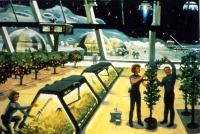
To live among the stars always meant solving the down-to-earth problem of sustainable waste management.
Traces the changing relationships between the fish resources and the people of the Great Lakes region.
In this book, Stacy Alaimo explores the influence of the newfound human intimacy with the deep sea might have on our broader relationship to the nonhuman world.