

Multimedia | journal article
“Imagining Sustainability Beyond COVID-19 in India”
In this commentary, Bejoy Thomas, Soumyajit Bhar, and Shoibal Chakravarty caution against optimistic narratives of environmental revival.
In this commentary, Bejoy Thomas, Soumyajit Bhar, and Shoibal Chakravarty caution against optimistic narratives of environmental revival.

Pandemic Disease in the Medieval World: Rethinking the Black Death, edited by Monica H. Green, is available to download in its entirety.
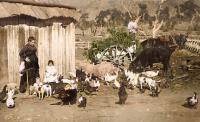
When the COVID-19 pandemic struck, demand for backyard chickens soared. This article traces how, since settlement, Australians have turned to backyard chooks in times of crisis in pursuit of food security.

In this episode from the New Books Network podcast, Ailton Krenak is interviewed on his recent book, Life Is Not Useful.

This review of Human Extinction and the Pandemic Imaginary, published by Christos Lynteris on the brink of the COVID-19 epidemic, problematises the tension between a dominant pandemic imaginary, perpetuated by outbreak preparedness policies and the media, and an emergent imaginary, historically and geographically.

This manuscript adopts an interspecies perspective on the One Health laboratory and argues that scientific care for sampled bats may cement hierarchies, with consequences for samplers and animals.
Full open-access volume Rural Transitions in Mongolia and Central Asia: Pastoralism, Wellbeing and Economic Relations (2026), edited by Ariell Ahearn, Gantulga Munkherdene, and Takahiro Ozaki.

Earth First! 26, no. 2 focuses on articles that discuss the human causes of bird flu pandemic, feautre urban farming and ecology issues, and discuss the indian movement’s new old problems.
Full open-access volume Grasping Soil: A Syllabus and Essays for the Environmental Humanities (2026), edited by Emily Brownell.