


Multimedia | journal article
Review of Green Wars by Megan Ybarra
Anja Nygren reviews the 2017 book Green Wars: Colonization and Conservation in the Maya Forest by Megan Ybarra.
Anja Nygren reviews the 2017 book Green Wars: Colonization and Conservation in the Maya Forest by Megan Ybarra.
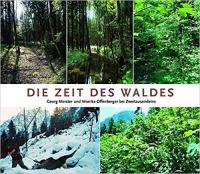
Through a collection of 445 photographs taken from precisely the same places at intervals of months, years and decades,Die Zeit des Waldes [The forest over time] offers a stop-action look at the diversity of transformations within Germany’s forests.
Through a case study of the nickel mine Ambatovy in Madagascar, the authors explore local perceptions of the magnitude and distribution of impacts of biodiversity offset projects on local well-being.
In this exhibition, ENHANCE ITN doctoral researchers showcase short virtual reality video installations that emerged out of their own empirical and ethnographic fieldwork. The videos work by tracking, rendering, and displaying full-field visual, sonic, and tactile data in a context in which the viewer has full control and is empowered to decide what to look at, listen to, and feel—or which story to experience.
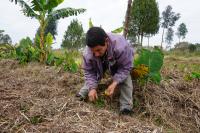
In this chapter from the virtual exhibition “Global Environments: A 360º Visual Journey,” Claire Lagier’s 360º video shows six-year-old agroforestry projects in a land reform settlement in the state of Paraná, Brazil. Her research focuses on agroecological rural social movements in this region.
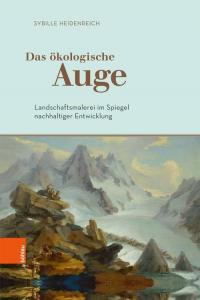
Sybille Heidenreich takes the reader on a journey through art history with an “ecological eye.” Looking at examples of Dürer, Monet, and Van Gogh, she offers insight into the emergence of present-day ecological crises and valuable food for thought on issues of sustainability.
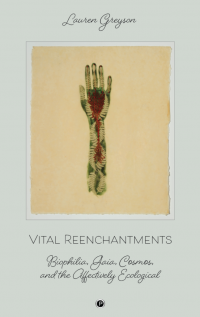
Vital Reenchantments takes up E. O. Wilson’s Biophilia (1984), James Lovelock’s Gaia (1979), and Carl Sagan’s Cosmos (1980), to show how each work fleshes out scientific concepts with attention to “affective wonder.”

The Power and the Water: Connecting Pasts with Futures examines the nature of environmental connectivities since industrialization and how their legacies challenge us in the early 21st century.

The Aldo Leopold Archives in the University of Wisconsin-Madison Libraries Digital Collections serve scholars, policy leaders, and the general public who look to Aldo Leopold for insight and inspiration on how to deal with complex conservation challenges facing society in the twenty-first century.

This article introduces a case for engaging with religious worldviews which can support the cause for environmental justice.