The Melting “Crown of the Continent”: Visual History of Glacier National Park
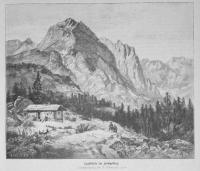
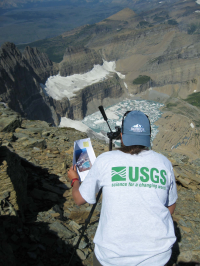
Detailing the converging human and geological histories of Glacier National Park, US, this article traces the demise of the park’s primary attraction, the glaciers.
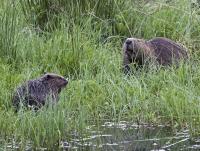
Beavers have been successfully reintroduced into Knapdale Forest, Scotland, an area where they went extinct over 400 years ago.
This article investigates how plants are supported by systems of ethno-political, military, and neoliberal power in urban Pakistan.
This German-language version of Sabine Wilke’s virtual exhibition features short excerpts from German-language literary texts that address human-nature entanglements. The aim is to show how literature can contribute to understanding and problematizing the relation between humans and nonhuman nature. What aspects of human-nature relations are addressed, at what point in literary history, and how are they shaped poetically? For the English-language version of this exhibition, click here.
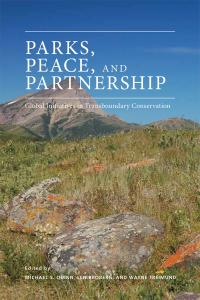
From Waterton-Glacier International Park to the European Alps, and Lake Titicaca in Peru and Bolivia, the essays in Parks, Peace, and Partnership provide illustrative examples of the challenges and new solutions that are emerging around the world.
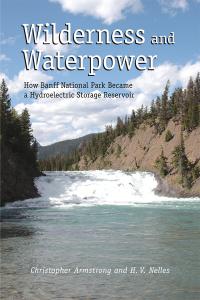
This book explores how the need for electricity at the turn of the century affected and shaped Banff National Park in Alberta, Canada.
Environmental activism in the 1960s forced the Army Corps of Engineers to limit the open-water dumping of dredge spoils in the Great Lakes and create new “natural” areas along the shore.
In this chapter of the German-language version of her virtual exhibition, “Mensch und Natur in der deutschen Literatur (Human-Nature Relations in German Literature),” Sabine Wilke examines mountains and glacial environments in German-language literary descriptions. Whereas the German Romantic poets still highlighted mountainous nature as deeply ambiguous, Goethe’s Faust tried to understand mountainous nature in its materiality through scientific studies. Modernism focuses on the more often destructive results of human-nature entanglements. For the English-language version of this exhibition, click here.
In this chapter of the German-language version of her virtual exhibition, “Mensch und Natur in der deutschen Literatur (Human-Nature Relations in German Literature),” Sabine Wilke examines forests and deforestation in works by Adalbert Stifter, Marlen Haushofer, and Elfriede Jelinek. For the English-language version of this exhibition, click here.
In this chapter of the German-language version of her virtual exhibition, “Mensch und Natur in der deutschen Literatur (Human-Nature Relations in German Literature),” Sabine Wilke shows how topics of pollution and waste in German-language writing reach back to the nineteenth century, when the production of industrial waste—and pollution of the air, ground, and water—first began to occur on a massive scale. For the English-language version of this exhibition, click here.