


Exhibition chapter
Human Pressures on Mobile Coastal Sand Dunes in Manalkadu, Sri Lanka | Once Upon a Dune
A reflection on human pressues on Sri Lankan sand dunes by Ruwan Sampath.
A reflection on human pressues on Sri Lankan sand dunes by Ruwan Sampath.
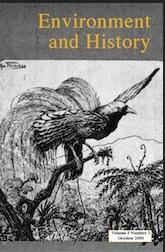
This paper describes a regional case study of the history of forestry practices in the north-eastern part of the central plateau of Switzerland during the nineteenth century, based on an analysis of official documents connected with forestry.

Katharine Suding, plant ecologist and professor at the University of Michigan, outlines the scaling of ecosystem restoration and how scaling is affecting the very notion of restoration in this presentation at the Latsis Symposium 2018.
Vera Krause’s “How to Reimagine Our Doomed Futures Through Ursula K. Le Guin’s Lens: A Case Study in the Argentinian Wetlands” is a sympathetic account of a so-called capybara “invasion” in contemporary Buenos Aires, taking its cue from the anarchist fantasy of Ursula K. Le Guin to show the difference between invading and reclaiming one’s space. It was one of the two honorable mentions in the reflective essay category of the RCC environmental writing competition “Tell the Untold!”
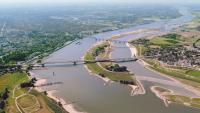
Nijmegen’s “Room for the Waal” project is a leading example for the application of the “making room for the river” water management approach.

In this chapter from the virtual exhibition “Global Environments: A 360º Visual Journey,” Anna Antonova’s 360º video immerses the viewer in a unique habitat on the Bulgarian coast of the Black Sea: the salt flats in the Atanasovsko Lake near the city of Burgas. She considers these salt flats a natural symbiosis between humans and their coastal environment, which support traditional human labor, industry, and health while simultaneously providing critical avian and aquatic ecosystem habitats.
Wan Yin Kim Fung’s “What Cannot Be Unearthed” is a sensitively told account that quite literally gives pause to the toxic fallout of nineteenth- and twentieth-century copper mining in eastern Japan. It was one of the two honorable mentions in the nonfiction category of the RCC environmental writing competition “Tell the Untold!”

This article situates contemporary debates over kangaroo-population management within Australia’s violent history of settler-colonial occupation and attendant environmental transformations.
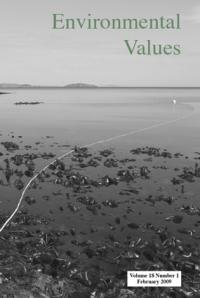
In this paper the author discusses three possible alternative interpretations of the meaning of places and place attachment in ‘new nature’ projects, and shows how all three imply a different view on human identity and history.
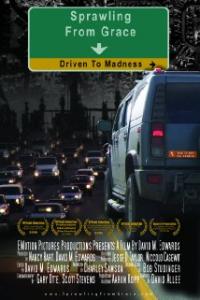
This film criticizes America’s suburban sprawl and its dependence on oil as being unsustainable for the future.