Interview with David B Williams, author of A Human and Natural History of Puget Sound
In this episode from the New Books Network podcast, David B Williams is interviewed on his recent book, A Human and Natural History of Puget Sound.
In this article, Antoine Acker provides a different perspective on the Anthropocene.
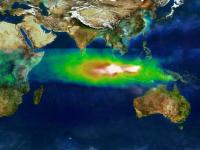
In 1997 and 1998 peat swamp forests burned in Borneo, Indonesia, spewing big amounts of carbon dioxide into the atmosphere.
The film examines the social and ecological consequences of the Turkey’s South-East-Anatolia-Project (GAP), designed to enable energy production and irrigation on a huge scale.
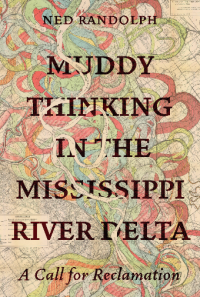
This book examines how the unruly Mississippi River and its muddy delta shaped the people, culture, and governance of the region.
Shannon Cram explores the slippery subjectivities of nuclear waste and nature at Washington State’s Hanford Nuclear Reservation, examining how this space is framed as both pristine habitat and waste frontier. She examines Hanford’s biological vector control program through the fruit fly and discusses how vector control uses instances of nuclear trespass to articulate the boundary between contaminated and uncontaminated. She concludes that nature is being recruited to do what the U.S. Department of Energy cannot: solve Hanford’s nuclear waste problem.
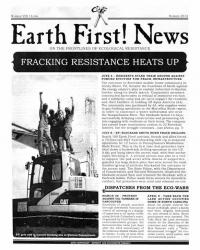
This issue of Earth First! News chronicles direct action and events on fracking, anti-coal, -logging, and -mining, wildlife, pollution, fossil fuel extraction, and the Earth First! Prisoner Support Project, from March to July 2012.
This film focuses on the threat of global warming and rising sea levels in the South Pacific Island State of Tuvalu.
The authors detail their experience of Puchuncavi, the largest, oldest, and most polluting industrial area in Chile. They approach it from a multidisciplinary viewpoint as an experience of the Anthropocene and advocate for an enhanced pedagogy of care born of our inherited pasts and of engagement, interest, and becoming as response-ability.
In this chapter from the virtual exhibition “Global Environments: A 360º Visual Journey,” Jesse Peterson’s 360° video presents both an environment and posthuman character from which the human cannot be disentangled, in the context of cultural eutrophication fueled by anthropogenic sources of pollution and climate change affecting the marine environment.