

Multimedia | book excerpt
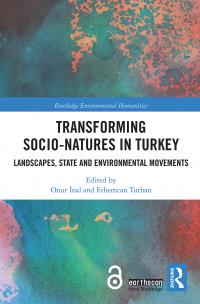
Transforming Socio-Natures in Turkey: Landscapes, State and Environmental Movements
This book is an exploration of the environmental makings and contested historical trajectories of environmental change in Turkey.
This book is an exploration of the environmental makings and contested historical trajectories of environmental change in Turkey.
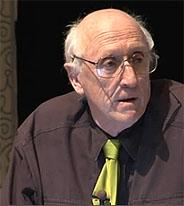
Stewart Brand talks about cities, nuclear power, genetic modification, and geo-engineering.

In this article, Andrew Light and Aurora Wallace highlight several examples of how environmental architecture has combined success and failure at taking a broader view of environmental questions, with a specific focus on one green skyscraper that may be good for the natural environment but not necessarily for the human environment of the city.

Finn Arne Jørgensen brings Wolfgang Schivelbusch’s analysis of the relationship between technology, media, and the perception of landscape into the digital age as a way of examining the spatiality of digital media and the natural world.
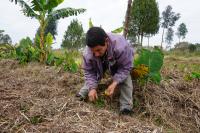
In this chapter from the virtual exhibition “Global Environments: A 360º Visual Journey,” Claire Lagier’s 360º video shows six-year-old agroforestry projects in a land reform settlement in the state of Paraná, Brazil. Her research focuses on agroecological rural social movements in this region.
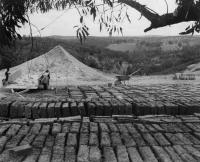
Environmental building in Australia as a form of communing with nature.
Garbage, wastewater, and hazardous waste: these are the lenses through which Melosi views nineteenth- and twentieth-century America. In broad overviews and specific case studies, Melosi treats the relationship between industrial expansion and urban growth from an ecological perspective.
Olwig asserts that the discipline we now know as environmental history owes a great deal of its impetus to the emergence at the beginning of the nineteenth century of a socially engaged and environmentally committed interdisciplinary ‘proto-discipline.’
This project looks at the historical intersections between environmental change and migration, and is particularly interested in climate-induced movements of people in the past.

Owain Jones raises questions about the relationships between self, time, memory, materiality, and place, using a non-representational creative approach based on image and textual collage.