"Vacating the Floodplain: Urban Property, Engineering, and Floods in Brisbane (1974-2011)"
Margaret Cook exposes the dominant socio-economic and political values that shaped flood management between 1974 and 2011 in Brisbane, Queensland, Australia.

In 1975, construction began for the Thames Barrier, a moveable flood defense located on the River Thames, downstream of central London in the United Kingdom.
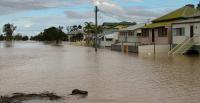
Brisbane’s 1974 floods substantially damaged Brisbane, accelerating the government’s plans for a second flood mitigation dam.
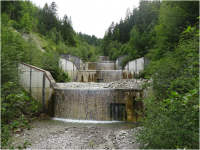
From channelizations to renaturations—the catastrophic flood of the Gürbe River in July 1990 prompted profound changes in approaches to flood protection.
Research on climatic variations in the sixteenth century has stressed the exceptionality of extreme events, but the case of the lower Po basin, where lack of instrumental data renders the concept of exceptionality complex and relative, shows that this is not necessarily valid.
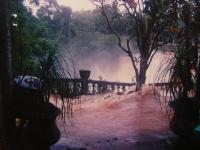
José Paronella’s dream continues at Paronella Park despite catastrophic flood and cyclonic events.
Rivers need property rights so that humans can live with floods.
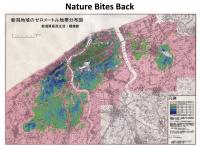
Engineering the Lower Shinano River in northeastern Japan expanded the risk of other flood and tsunami damage.
Die Natur der Gefahr traces the history of the Ohio river, its significance for trade and industry, and its flooding disasters between the late eighteenth century through to the twentieth century.
This volume explores the potential contribution memory studies can make to policymaking, in particular on conservation and disaster resilience.