

Arcadia
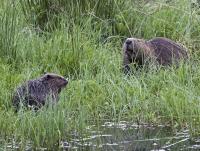
Resistance and Rewilding: The Return of Beavers to Knapdale Forest
Beavers have been successfully reintroduced into Knapdale Forest, Scotland, an area where they went extinct over 400 years ago.
Beavers have been successfully reintroduced into Knapdale Forest, Scotland, an area where they went extinct over 400 years ago.
From Waterton-Glacier International Park to the European Alps, and Lake Titicaca in Peru and Bolivia, the essays in Parks, Peace, and Partnership provide illustrative examples of the challenges and new solutions that are emerging around the world.

This book explores how the need for electricity at the turn of the century affected and shaped Banff National Park in Alberta, Canada.
This short film combines remote sensing, qualitative interviews, desk research, and illustrations to show the complexities and controversies surrounding mangrove reforestation in Senegal and The Gambia.
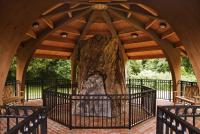
The surprising pedigree of a botanical idea.
The author attempts to reframe the classical distinction in conservation biology between native and invasive species by referring to migration and settlement of nonhuman beings as diasporas. She uses the introduction of Canadian beavers in Chilean Tierra del Fuego in 1947 as a case study.
This article explores the past and future of one of Mumbai’s largest city forests.
Through a case study of the nickel mine Ambatovy in Madagascar, the authors explore local perceptions of the magnitude and distribution of impacts of biodiversity offset projects on local well-being.

In this chapter from the virtual exhibition “Global Environments: A 360º Visual Journey,” Sarah Elizabeth Yoho’s 360° video captures the process of constructing a dry stone wall in Italy’s Cinque Terre. In cooperation with community organization Tu Quoque Vernazza, it was filmed over nine days and is shown in time-lapse. The camera captures the grapevine’s point of view of Cinque Terre life.

In this exhibition, ENHANCE ITN doctoral researchers showcase short virtual reality video installations that emerged out of their own empirical and ethnographic fieldwork. The videos work by tracking, rendering, and displaying full-field visual, sonic, and tactile data in a context in which the viewer has full control and is empowered to decide what to look at, listen to, and feel—or which story to experience.