

Multimedia | interviews and talks
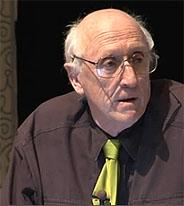
Brand, Stewart, "4 Environmental Heresies"
Stewart Brand talks about cities, nuclear power, genetic modification, and geo-engineering.
Stewart Brand talks about cities, nuclear power, genetic modification, and geo-engineering.

Environmental Humanities Switzerland (EH-CH) aims to become a key regional network in the growing worldwide movement to provide novel insights about humans in nature, especially through the goal of helping resolve complex environmental problems.
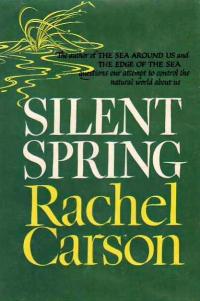
Silent Spring describes the harmful effects of pesticides on the environment, and is widely credited with helping launch the environmental movement.

With over 25 percent of its land set aside in national parks and other protected areas, Costa Rica is renowned worldwide as “the green republic.” Sterling Evans explores the establishment of the country’s national park system.
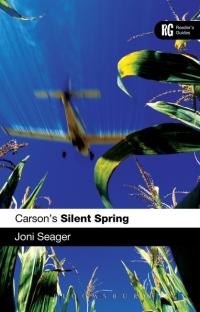
Carson’s Silent Spring: A Reader’s Guide provides an in-depth analysis and contextualization of Silent Spring. It also surveys the lasting impact the text has had on the environmentalist movement in the last fifty years.
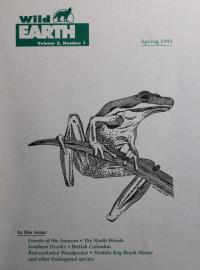
Wild Earth 3, no. 1 on the Northwoods wilderness recovery, the Southern Ozarks, endangered species like the Red-Cockaded Woodpecker and the Perdido Key Beach Mouse, and the breadth and the limits of the deep ecology movement.

This episode of a four-part documentary series reveals the struggles of indigenous Hawaiians and Australian Aboriginals to protect their sacred areas from modern and industrial encroachment.
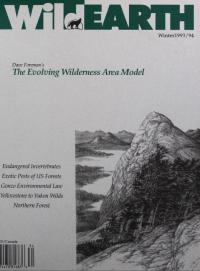
Wild Earth 3, no. 4 puts the spotlight on endangered invertebrates, exotic pests in US forests, the Northern Rockies Ecosystem Protection Act, and keywords of conservation and environmental discourses.
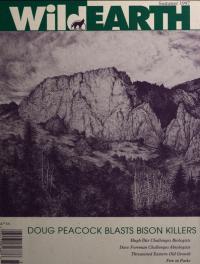
In Wild Earth 7, no. 2 Doug Peacock presents his field report on the Yellowstone bison slaughter, Reed Noss writes about endangered major ecosystems of the United States, and Virginia Abernethy analyzes if and how population growth discourages environmentally sound behavior.

In the “Living Lexicon for the Environmental Section” of Environmental Humanities, Maan Barua reveals encounters as spatializing and “ecologizing” politics in ways that are vital for the environmental humanities’ efforts to redistribute powers to act and to flourish.