Standing on Sacred Ground: Pilgrims and Tourists
This episode of a four-part documentary series reveals the struggles of how two indigenous communities, in Russia’s Republic of Altai and in California, are resisting government mega-projects.

This episode of a four-part documentary series reveals the struggles of indigenous Papua New Guineans and Canada’s First Nations people against industrial threats on their health, livelihoods and cultural survival.
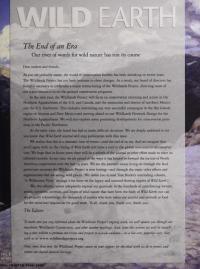
Wild Earth 13, no. 1, features essays that present contrasting views on mountain biking in the wilderness, the Clovis culture and origins of ecological awareness, as well as the National Wilderness Preservation System and wilderness abuse.
Wild Earth 14, no. 3/4, is the last issue of the Wild Earth Journal. It presents essays on connectivity and long-distance migration in human-fragmented landscapes, the Great Bear Rainforest archipelago, and rewilding Patagonia.
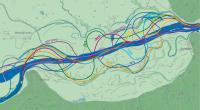
The history of the Danube regulation in the Austrian Machland during the nineteenth century shows the enormous efforts made to transform a dynamic river landscape into a navigable waterway and a stable floodplain that supports the various human demands.
This film follows a diverse group of women from around the world as they attend the Barefoot College in India. The college teaches them solar engineering skills to allow them to contribute to their communities and improve their daily lives, but societal and familial pressure proves challenging.
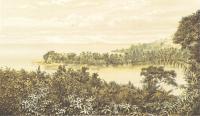
In the second half of the nineteenth century, the establishment of Keppel Harbour would lay the foundations for Singapore to become a logistics city.
Apart from a diverse and previously unknown fauna, explorations and receding ice caps have uncovered a sought-after abundance of natural resources in the Arctic region. Historian Elena Baldassarri argues that the exploitation of these resources not only constitutes a threat to the non-human world, but also to the Inuit people. This is a chapter of the virtual exhibition “The Northwest Passage: Myth, Environment, and Resources.”
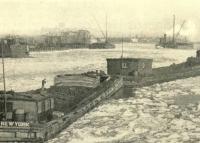
Severe winter weather in 1917–1918 paralyzed New York Harbor impacting logistical operations for the Allies in World War I.
In this chapter of the virtual exhibition “Energy Transitions,” historian Nuno Luís Madureira writes about different kinds of energy-regime shifts and their preconditions.