"Re-framing Flood Control in England and Wales"
In their article, William R. Sheate and J. Ivan Scrase argue that for a risk-oriented framing to succeed, new assumptions about causation and a new ethical outlook are now needed.
The history of environmental anxiety in nineteenth- and twentieth-century New Zealand can be traced by focusing on problems caused by deforestation.
Rivers need property rights so that humans can live with floods.
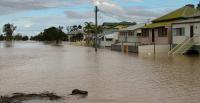
Colten and Grismore examine the Amite River flood in August 2016 against the backdrop of collective flood memory and public policy.
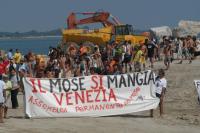
In the early 2000s, a coalition of citizen-activists in Venice denounced the state’s massive flood-barrier project, raising public participation in the fate of the lagoon.
On Water showcases the range of disciplines and methodological approaches that are brought together at the Rachel Carson Center for Environment and Society. In this volume, nine scholars affiliated with the RCC present their research in the fields of history, philosophy, literary studies, geography, and cultural studies.
Human geographer Mike Hulme looks at sociotechnical developments that have changed the climate and, at the same time, the way we experience the weather.
The essays in this collection explore how masculine roles, identities, and practices shape human relationships with the more-than-human world.
This issue of RCC Perspectives offers insights into similarities and differences in the ways people in Asia have tried to master and control the often unpredictable and volatile environments of which they were part
Indonesian state experts introduced invasive species into West Papua, a deliberate ecological disruption that advances a colonial agenda disguised as development.