


Arcadia
Blood in the Water: A Digital History Project on the Geography of Pontiac’s War, 1763
Digital tools reveal a geographic logic to the violence of Pontiac’s War.
Digital tools reveal a geographic logic to the violence of Pontiac’s War.
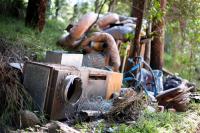
This chapter introduces the virtual exhibition “The Life of Waste.” Historian Simone M. Müller discusses six truisms of waste, namely “everything is waste, waste is a matter of perspective, waste needs to be managed, waste is life, waste has power and waste has an expiration date.”
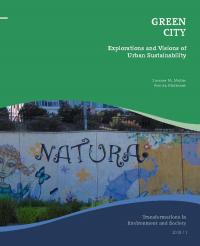
This volume explores the “green city” concept from a global and interdisciplinary perspective. Contributions examine the conflicts inherent in eco-modernization and investigate opportunities to respond meaningfully to urban environmental challenges.
Barthold analyzes the C40 Cities Climate Leadership Group to illustrate how city networks are powerful actors in the global dissemination of eco-modernization strategies aimed at decoupling economic growth from environmental degradation.
May Tan-Mullins looks at the decision-making processes involved in developing the Sino-Singaporean Tianjin Eco-city in China.
Cindy Sturm looks at differences in climate-related policymaking Münster and Dresden.
Nir Barak explores the limits of techno-managerial approaches towards creating greener cities.
Vanesa Castán Broto critiques sustainable development agendas that approach green cities as merely engines of economic growth.
Dorothee Brantz and Avi Sharma discuss the history of green urban visions, looking at historical precedents of the modern green city.
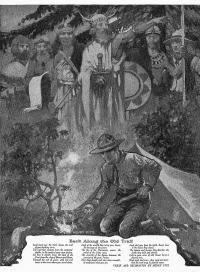
These Boy Scout images, particularly focused on the 1919–1925 era, demonstrate that human labor and history permeated popular American nature ideology and hiking practices at that time.