

Perspectives Article
River Rights and the Rights of Rivers: The Case of Acheloos
Kalantzakos describes how flawed policy decisions damaged Greece’s Archeloos river, and how Rights of Nature could have mitigated the damage.
Kalantzakos describes how flawed policy decisions damaged Greece’s Archeloos river, and how Rights of Nature could have mitigated the damage.

This article investigates the transition of water supply in Bangalore, where wells were gradually replaced by piped water.
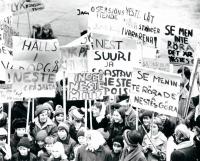
This article studies the “Neste war,” 1970–1972, the first major victory of the environmental movement in Finland.
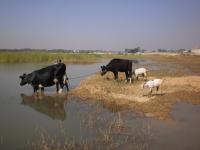
The urbanization of Bangalore transformed the once-strong relationship between communities and the lakes that they once created and maintained.

Affrica Taylor, Veronica Pacini-Ketchabaw, Sandrina de Finney, and Mindy Blaise edit and introduce a special section on “Inheriting the Ecological Legacies of Settler Colonialism.” The three essays that follow ponder the question of ecological inheritance in the settler colonial contexts of Canada and Australia, cognizant of the fact that settler colonialism remains an incomplete project.
In this article for a special section on “Inheriting the Ecological Legacies of Settler Colonialism,” Lesley Instone and Affrica Taylor engage with the figure of the Anthropocene as the impetus for rethinking the messy environmental legacies of Australian settler colonialism.
In this article for a Special Section on “Inheriting the Ecological Legacies of Settler Colonialism,” Veronica Pacini-Ketchabaw and Fikile Nxumalo relate raccoon-child-educator encounters to consider how raccoons’ repeated boundary-crossing and the perception of raccoons as unruly subjects might reveal the impossibility of the nature/culture divide. They do so through a series of situated, everyday stories from childcare centers in Canada.
In this Special Commentary Section titled “Replies to An Ecomodernist Manifesto,” edited by Eileen Crist and Thom Van Dooren, Bruno Latour explores the political import of the notion of “ecomodernism.”
In this Special Commentary Section titled “Replies to An Ecomodernist Manifesto,” edited by Eileen Crist and Thom Van Dooren, Rosemary-Claire Collard, Jessica Dempsey, and Juanita Sundberg critique the manifesto as fostering amnesia: amnesia about the uneven and violent nature of modernization as well as about the struggles that have underpinned efforts to alleviate inequality and violence.
In this special commentary section titled “Replies to An Ecomodernist Manifesto,” edited by Eileen Crist and Thom Van Dooren, Clive Hamilton examines Erle Ellis’ ‘good Anthropocene,’ an unlikely juxtaposition which has now been amplified into the idea of the “great Anthropocene” and set out in An Ecomodernist Manifesto.