


Arcadia
Making Methane Visible: From Local Leaks to EU Regulation
To what extent did the unveiling of gas leaks “scale up” a Romanian technical problem into an EU environmental issue?
To what extent did the unveiling of gas leaks “scale up” a Romanian technical problem into an EU environmental issue?
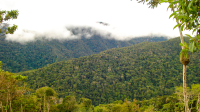
The Andean-Amazonian conservation area Cordillera Escalera reveals the history of a forest whose ecological integrity is due to the native population’s efforts to preserve it.
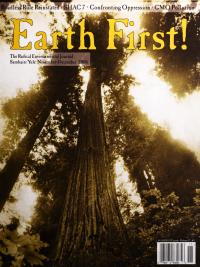
Earth First! 27, no. 1 reports on topics such as coal mining in Bangladesh, uprising against the fossil-fuel industry in the UK, the anniversary of Hurricane Katrina, and genetically modified organisms escaping their test sites and getting into the food supply.

Earth First! 26, no. 6 features articles on the threat to Canadian wilderness through oil sands mining, the global oceans’ invasion by plastic debris, and an update on the state of the journal.

Earth First! 26, no. 5 features articles on “whale wars,” “immigration and border militarization,” and “the e-waste epidemic.”
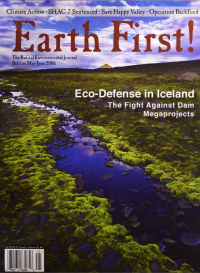
Earth First! 26, no. 4 features essays on biodiversity and animal activism and reports on eco-defense in Iceland, protests against mining in Papua, Indonesia, and the resistance against Shell in Nigeria.
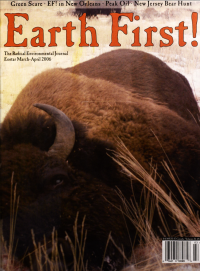
Earth First! 26, no. 3 reports from the buffalo field campaign in Montana, gives an account of the activists’ fight against governmental sanctions and the “criminalization of dissent,” and considers relations between the high cancer rates and the multitude of petrochemical plants in Louisiana.
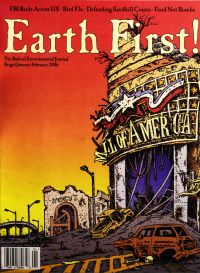
Earth First! 26, no. 2 focuses on articles that discuss the human causes of bird flu pandemic, feautre urban farming and ecology issues, and discuss the indian movement’s new old problems.
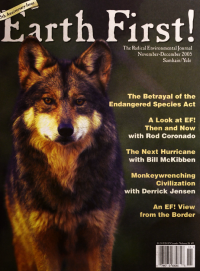
Earth First! 26, no. 1 features reports about climate change and climate justice, looks into the future of civilization, and fights for the rights of animals.
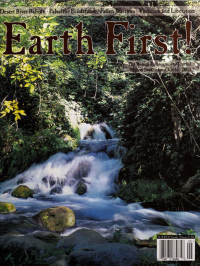
Earth First! 25, no. 6 is devoted to campaigns and activists in Canada, the United States and Palestine who deal with river, mountain and forest conservation, and fight for animal rights and against pollution and apartheid.