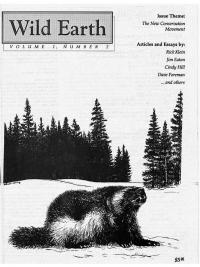
Wild Earth 1, no. 2
Wild Earth 1, no. 2, with the issue theme “The New Conservation Movement,” on reforming the Sierra Club, grizzly hunting in Montana, and an Ancient Forest Reserve proposal for the Mendocino National Forest.
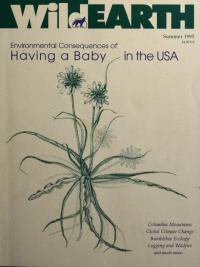
Wild Earth 1, no. 3 with essays on hydro development in North America, trans-boundary ecosystem preservation, the central Appalachian wilderness, and the need for deep ecological language.
Wild Earth 5, no. 2 discusses the environmental consequences of having a baby in the United States; bumblebee ecology; and the Nevada Biodiversity Research and Conservation Initiative.
Wild Earth 5, no. 1 focuses on prairie dog ecosystems and includes a Minnesota biosphere recovery strategy.
Wild Earth 4, no. 1 discusses aquatic ecosystems, vacuuming the Northern Forest, mismanagement in the Southern Appalachians, and lessons from the Vermont wilderness.
Wild Earth 6, no. 2 features Bill McKibben on nature writing and common ground, Laura Westra writes about ecosystem integrity, sustainability, and the “Fish Wars”, and W. O. Pruitt explains “The Caribou Commons.”
Wild Earth 3, no. 3 features articles on protecting biodiversity in the Selkirk Mountains, preserving biodiversity in caves, restoring the Wild Atlantic Salmon, and changing state forestry laws.
Wild Earth 10, no. 1, presents essays on the mission, vision, and purpose of “The Wildlands Project,” which aims “to design and implement systems of protected natural areas/wildlands networks across the continent.”
Wild Earth 8, no. 4 celebrates a “Wilderness Revival.” The essays present American and Canadian perspectives on wilderness and its values, wilderness politics, and wilderness campaigns both new and old.
In Wild Earth 5, no. 3 Wendell Berry writes about private property and the Commonwealth, Thomas P. Rooney reflects on global warming, and Paul J. Kalisz analyses sustainable silviculture in the hardwood forests of the eastern United States.