

Multimedia | film profile
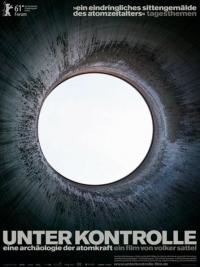
Unter Kontrolle [Under Control]
This film provides insight into the secretive way of life behind the walls of German nuclear plants.
This film provides insight into the secretive way of life behind the walls of German nuclear plants.
The author of Nature and Power: A Global History of the Environment, Joachim Radkau, reviews this volume of the papers of the German green party, which covers the first term during which it was represented in the Bundestag.
This volume traces the perception of the global environmental crisis on the basis of primary sources.
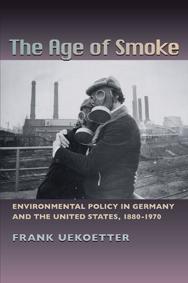
A comparative history of environmental policy development in Germany and the United States from 1880 to 1970, and the rise of civic activism to combat air pollution.

In this issue of RCC Perspectives, Frank Uekoetter addresses monocultures as more than a cultural phenomenon, considering the science, economics, and technology behind the trend.
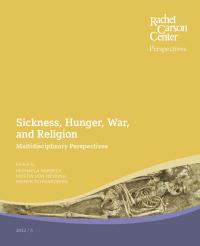
Disease, hunger, war, and religion have shaped human existence over many centuries. This volume of RCC Perspectives presents exciting syntheses between research in the fields of archaeology, anthropology, and history.
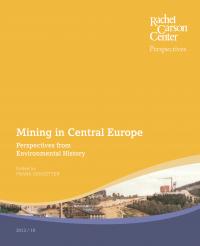
The article traces the history of mining and smelting in Ramsbeck, Germany, showing how conflicting interests between mining and agriculture were negotiated.
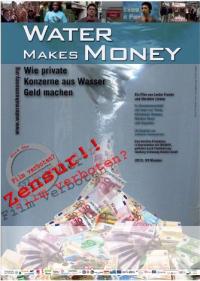
This film investigates the increasing trend towards privatizing control of water resources, and the response of cities, organizations, municipalities, and communities.
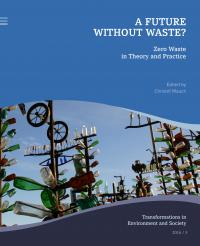
Is a world without waste truly achievable? The essays in this volume of RCC Perspectives discuss zero waste as a vision, as a historical concept, and as an international practice. Going beyond the motto of “reduce, reuse, recycle,” they reflect on the feasibility of creating closed material cycles and explore real-world examples of challenges and successes on the way to zero waste.
The participants in a roundtable discussion that took place in May 2013 at LMU’s Center for Advanced Studies draw on their collective experience in engineering, anthropology, environmental justice, and city politics, in order to explore the impact of waste, and the strategies we should, and currently do, employ as we work towards zero waste in the world.