The Power of Waste | The Life of Waste
This chapter from the virtual exhibition “The Life of Waste” considers the ways in which waste relates to power. It aligns with power structures, can be an empowering feature, or possess power in and of itself.
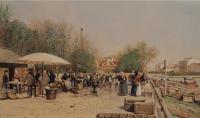

This exhibition shows some of the many links between the Neva River in St. Petersburg and the Viennese Danube discovered during the joint Russian-Austrian research project “The Long-Term Dynamics of Fish Populations and Ecosystems of European Rivers.”
This chapter from the virtual exhibition “The Life of Waste” sheds light on what people think waste is and is not, the cultural and normative conceptions of waste, and forms and landscapes of waste.
In this chapter of their virtual exhibition “‘Commanding, Sovereign Stream’: The Neva and the Viennese Danube in the History of Imperial Metropolitan Centers,” the authors describe fish resources in St. Petersburg and Vienna and their role in urban life from different perspectives. Fisheries constituted an important part of local economic activities and fishers—both poor professionals and wealthy leisure anglers—were very visible in the cities’ crowds, at their markets, and on the banks of their rivers and canals.
This chapter from the virtual exhibition “The Life of Waste” considers the myriad practices of managing waste, such as burning, burying, discarding, disposal, reuse, and recycling.
In this chapter of her virtual exhibition “Human-Nature Relations in German Literature,” Sabine Wilke discusses texts that register transformations of landscapes or take a position on their causes. For the German-language version of this exhibition, click here.
In this chapter of the virtual exhibition “Energy Transitions,” historian Nuno Luís Madureira argues that the study of such transitions itself has gone through changes over the course of history.
In this chapter of their virtual exhibition “‘Commanding, Sovereign Stream’: The Neva and the Viennese Danube in the History of Imperial Metropolitan Centers,” the authors discuss how the growing population required a lot of food and fish was significant part of the city dwellers’ diets. Social stratification led to the clear division between fish commodities for the wealthy and those for poor citizens, though some kinds of fish could be popular among all dwellers, regardless of social differences.