Wild Earth 3, no. 1
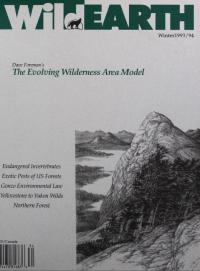
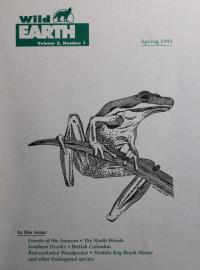
Wild Earth 3, no. 1 on the Northwoods wilderness recovery, the Southern Ozarks, endangered species like the Red-Cockaded Woodpecker and the Perdido Key Beach Mouse, and the breadth and the limits of the deep ecology movement.

This project looks at the historical intersections between environmental change and migration, and is particularly interested in climate-induced movements of people in the past.
This episode of a four-part documentary series reveals the struggles of indigenous Hawaiians and Australian Aboriginals to protect their sacred areas from modern and industrial encroachment.
In this paper Tee Rogers-Hayden and John R. Campbell use the case of New Zealand’s Royal Commission on Genetic Modification to explore the application of science discourses as used by environmental groups.
Wild Earth 3, no. 4 puts the spotlight on endangered invertebrates, exotic pests in US forests, the Northern Rockies Ecosystem Protection Act, and keywords of conservation and environmental discourses.
In the special section “Imagining Anew: Challenges of Representing the Anthropocene,” Wolfgang Struck’s essay examines the renewed attraction to the medium of the atlas in light of representational challenges raised by the model of the Anthropocene.
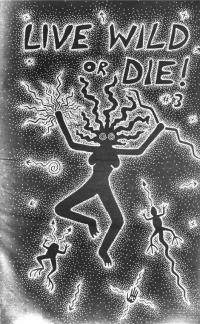
In Live Wild or Die! no. 3 an unnamed contributor gives an update from the revolutionary eco-terrorist Pie Brigade, held to save the redwoods in northern California’s Headwaters forest. In addition, Simon Moon calls for help with sabotaging buffalo hunting, and Anders Corr discusses the environmental impact of land ownership.
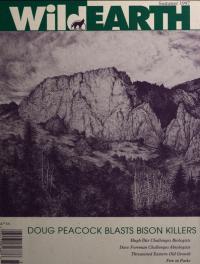
In Wild Earth 7, no. 2 Doug Peacock presents his field report on the Yellowstone bison slaughter, Reed Noss writes about endangered major ecosystems of the United States, and Virginia Abernethy analyzes if and how population growth discourages environmentally sound behavior.
In the “Living Lexicon for the Environmental Section” of Environmental Humanities, Maan Barua reveals encounters as spatializing and “ecologizing” politics in ways that are vital for the environmental humanities’ efforts to redistribute powers to act and to flourish.
In The Next Industrial Revolution, architect Bill McDonough and chemist Michael Braungart bring together ecology and human design.