

Perspectives Article
Te Aitanga a Hauiti and Paikea: Whale People in the Modern Whaling Era
Billie Lythberg and Wayne Ngata explore what it means to be whale people in the modern whaling period.
Billie Lythberg and Wayne Ngata explore what it means to be whale people in the modern whaling period.
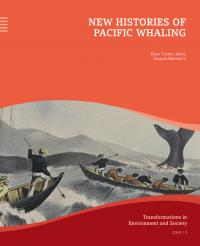
Joshua L. Reid concludes that the history of Pacific whaling has undergone a scholarly renaissance.
Short profiles of university and course syllabi, and collaborative syllabi projects on Environment and Society.
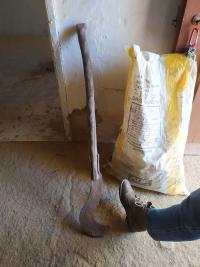
In 1966, historian Albert Silbert highlighted the longstanding importance of fire in the traditional Portuguese rural economy, at a time when such practices were being erased from the landscape.

Tropical humidity necessitated a quest for rust-proof insect pins, determining which specimens could be preserved, which tools could be used, and ultimately what knowledge could be produced in the Dutch East Indies.
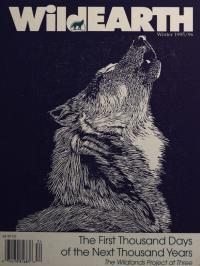
In Wild Earth 5, no. 4 Reed F. Noss reflects on what endangered ecosystems should mean to The Wildlands Project, and preliminary results of a biodiversity analysis in the Greater North Cascades ecosystem and a biodiversity conservation plan for the Klamath/Siskiyou region are presented.

In Wild Earth 5, no. 3 Wendell Berry writes about private property and the Commonwealth, Thomas P. Rooney reflects on global warming, and Paul J. Kalisz analyses sustainable silviculture in the hardwood forests of the eastern United States.

In this “Industrial Civilization Collapse!” First Pre-anniversary issue of Live Wild Or Die! Jerry Mander asks readers to smash their computers, and Ward Churchill debunks pacifism as pathology.
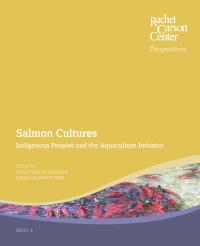
Camilla Brattland and Dorothee Schreiber emphasize that, despite varying stances on salmon farming, Indigenous communities share a commitment to protecting wild salmon, asserting their rights and perspectives, and promoting collaborative decision-making locally and globally.
Fred and Isaac Metallic of the Mi’kmaq community emphasize Indigenous knowledge, treaty rights, and sustainable fisheries management as vital to protecting salmon, cultural heritage, and self-governance despite ongoing challenges.