

Perspectives Article
From East to West
Lajos Rácz traces his development as a climate historian back to his experience growing up in rural Hungary.
Lajos Rácz traces his development as a climate historian back to his experience growing up in rural Hungary.
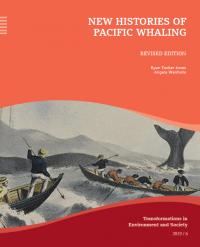
This volume provides new histories of Pacific whaling from untold perspectives.

Patricia Limerick argues that environmental history offers a unique opportunity to address contemporary ecological challenges while revitalizing the historical profession.
John R. McNeill emphasizes the need for environmental history to broaden its scope by addressing underexplored regions, eras, and themes.
John R. Gillis critiques the landlocked nature of environmental history, highlighting its neglect of oceans, which comprise most of Earth’s surface and are central to its ecosystems.
David Blackbourn highlights how environmental history reflects broader shifts in the historical discipline, such as the renewed focus on place, materiality, and “big history.”
Harriet Ritvo explores the intersection of environmental history and environmental concerns, emphasizing how the discipline reflects the growing awareness of global environmental challenges.
Franz Uekoetter examines the evolution of environmental history in the context of globalization, highlighting its early global focus and the more recent trend towards specialization and nuanced narratives.
Mahesh Rangarajan explores the intersection of nation-states, borders, and nature, emphasizing how human-made boundaries conflict with the natural world’s disregard for such limits.
Martin V. Melosi reflects on the past and future of environmental history, noting its broad scope but also its tendencies to prioritize social history and ecological concerns over certain “top-down” topics, such as the environmental politics of specific governments.