

Perspectives
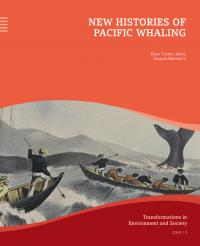
New Histories of Pacific Whaling
This volume provides new histories of Pacific whaling from untold perspectives.
This volume provides new histories of Pacific whaling from untold perspectives.

Through a combination of memory, experience, and archival research, this volume explores the connection between storytelling and the writing of environmental histories in Germany and Italy.
Wilko Graf von Hardenberg discusses the ways water management policies shaped the landscape of his childhood during the years of the Fascist regime in Italy.
Sophie Lange discusses the environmental history of the Elbe river in Hamburg and an environmental dispute arising from mercury pollution between the Federal Republic of Germany and the German Democratic Republic.
Claudio de Majo argues that the notion of the commons, often seen as an economically motivated notion, could also be seen in relation to metabolic cycles, both in the mountains of Sila in Italy and in the uplands of the Serra Gaucha in southern Brazil.
Roberta Biasillo traces Italy’s colonial engagements in Africa through a reflection sources uncovered in the Italian archives.
David-Christopher Assmann explores how rubbish is translated into (literary) text, arguing that discarded materials are difficult to translate, resisting discursive orders and practices.
Environmental historians Gabriella Corona and Christof Mauch discuss national traditions, current issues, and future challenges in environmental history in Germany and Italy.
Combinando memoria, esperienza e ricerca d’archivio, questo volume esplora la connessione tra lo storytelling e la storia ambientale in Germania e in Italia.
Wilko Graf von Hardenberg percorre a ritroso i paesaggi della sua infanzia e riflette sulle politiche di gestione delle acque durante gli anni del regime fascista in Italia.