Multimedia | journal article
“The Post-COVID India: Making Science and Technology Socially and Environmentally Relevant”
This is a commentary on COVID-19 and its relation to human and environmental systems.
This is a commentary on COVID-19 and its relation to human and environmental systems.

In this episode from the New Books Network podcast, former Rachel Carson Center fellow David Moon is interviewed on his new book, The American Steppes: The Unexpected Russian Roots of Great Plains Agriculture, 1870s–1930s.
In this episode from the New Books Network podcast, Judkin Browning and Timothy Silver are interviewed on their new book, An Environmental History of the Civil War.
In this episode from the New Books Network podcast, former Rachel Carson Center fellow Helen Rozwadowski is interviewed on her 2018 book, Vast Expanses: A History of the Oceans.
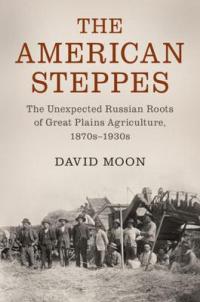
Excerpt from The American Steppes: The Unexpected Russian Roots of Great Plains Agriculture, 1870s–1930s by former Rachel Carson Center fellow David Moon.
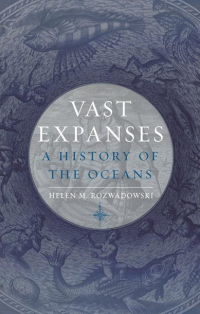
Excerpt from former Rachel Carson Center fellow Helen Rozwadowski’s book Vast Expanses: A History of the Oceans.
In this episode from the New Books Network podcast, Emily Wakild and Michelle K. Berry are interviewed on their new book, A Primer for Teaching Environmental History: Ten Design Principles.
In this episode from the New Books Network podcast, former Rachel Carson Center fellow David Munns is interviewed on his new book, Engineering the Environment: Phytotrons and the Quest for Climate Control in the Cold War.
This article presents an overview of the environmental history of the Brazilian Cerrado, its environmental characteristics and the processes related to the historical change in the landscapes of this endangered ecosystem.