Rachel Carson’s Silent Spring, a Book that Changed the World
This version 2, published in 2020, includes minor updates to the original 2012 virtual exhibition (view PDF here) and applies the Environment & Society Portal's responsive layout.

Overview of the exhibition “Rachel Carson’s Silent Spring: A book that changed the world” by historian Mark Stoll. This exhibition presents the global reception and impact of Rachel Carson’s Silent Spring.
This is Chapter 1 of the exhibition “Rachel Carson’s Silent Spring: A book that changed the world” by historian Mark Stoll.
This is Chapter 3 of the exhibition “Rachel Carson’s Silent Spring: A book that changed the world” by historian Mark Stoll.
This is Chapter 4 of the exhibition “Rachel Carson’s Silent Spring: A book that changed the world” by historian Mark Stoll.
This is Chapter 5 of the exhibition “Rachel Carson’s Silent Spring: A book that changed the world” by historian Mark Stoll.
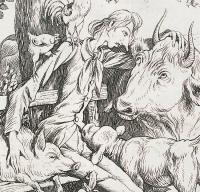
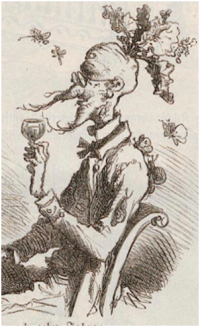
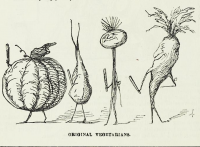
Since the mid-nineteenth century, vegetarianism and veganism have attracted public attention and provoked controversial discussions in Europe. The exhibition traces the development of the discourse on vegetarianism in caricatures, satirical drawings and poems that mock the movement, its worldview, social structures, and eating habits.
While English satire magazines mocked vegetarianism since the 1840s, the first German caricatures appeared some 30 years later. Early drawings often imagined that a vegetarian would gradually transform into a plant. Other recurring topics are the assumed correlation between (meatless) nutrition and (peaceful, fragile) physical appearance and character, as well as the debate over whether a meat-rich or a meat-free diet was better for human health.
In the nineteenth century, there was much debate about the question of which way of living could be regarded as “natural.” Caricatures on vegetarianism mock ideas of the “natural” relationship between animal and man, and draft utopian as well as dystopian visions of a vegetarian future.