
Climate Disaster, Ecoanxiety, and Frankenstein: Mount Tambora and Its Aftereffects
Ecoanxiety in Mary Shelley’s Frankenstein signals our ability to create art in reaction to environmental disaster in increasingly unstable planetary futures.
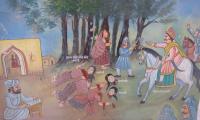
This article traces how Bishnoi religious beliefs have informed environmental activism as well as present-day forest conservation and wildlife-protection strategies in the Thar Desert, India.
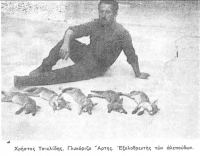
On masculinity, hunting, and the evolving Hero-Hunter concept in the 1960s Greek Anthropocene.
To live among the stars always meant solving the down-to-earth problem of sustainable waste management.
Emerging from an Indigenous Nishnaabeg ontology, “survivance” calls for an understanding of other-than-human persons as agentially surviving and resisting colonial violence.
In 1966, historian Albert Silbert highlighted the longstanding importance of fire in the traditional Portuguese rural economy, at a time when such practices were being erased from the landscape.
Tropical humidity necessitated a quest for rust-proof insect pins, determining which specimens could be preserved, which tools could be used, and ultimately what knowledge could be produced in the Dutch East Indies.
Zahīr ud-Dīn Muhammad Bābur’s autobiography anticipates an ecological and multispecies way of understanding the environment, highlighting confluence rather than divergence between humans and nonhumans.
Miyaoi Yasuo’s 1858 collection of tales, Kidan zasshi, challenges assumed human–animal boundaries, portraying shared ethics, reincarnation, and emotional connections by blending folklore and insights drawn from Edo-period experience.