Climate Disaster, Ecoanxiety, and Frankenstein: Mount Tambora and Its Aftereffects
Ecoanxiety in Mary Shelley’s Frankenstein signals our ability to create art in reaction to environmental disaster in increasingly unstable planetary futures.
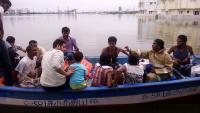
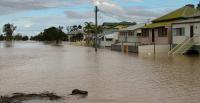
This article looks at the terminology around the 2015 flooding in Chennai city in India.
The premises of water allocation legislation came under harsh scrutiny in the early 2000s as severe drought plagued the American Southwest.
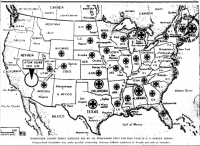
When a tornado strikes Worcester, Massachusetts, residents suspect the disaster is the work of an unlikely culprit—the atomic bomb.
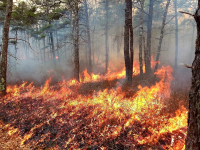
Although known today more for beaches than blazes, Cape Cod experienced severe wildfires in 1887 that—when remembered—draw attention to the region’s inherent flammability and need for fire-adaptive management.
This article examines the implications of the discussions surrounding the Justinianic Plague for the discipline of history.
Rivers need property rights so that humans can live with floods.
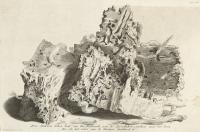
An invasive mollusk called the shipworm (Teredo navalis) attacked coastal dikes in the Netherlands in the 1730s, leading to changes in the design of dikes.
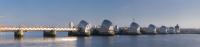
In 1975, construction began for the Thames Barrier, a moveable flood defense located on the River Thames, downstream of central London in the United Kingdom.
In 1969, the Georgian resort of Pitsunda and its beach were severely damaged by a storm. This was largely due to an ongoing process of coastal erosion caused by anthropogenic influences.