

Multimedia | Env. blogs & websites
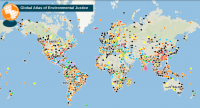
The Global Environmental Justice Atlas (EJAtlas)
The EJAtlas is an interactive online platform coordinated and managed by researchers and activists.
The EJAtlas is an interactive online platform coordinated and managed by researchers and activists.
A reflection on the use of images in environmental history.
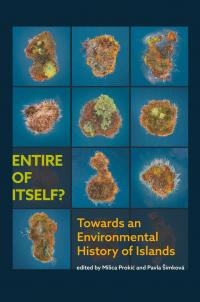
Full text of Entire of Itself? Towards an Environmental History of Islands, edited by Rachel Carson Center almunae Milica Prokić and Pavla Šimková,
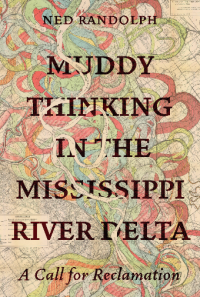
This book examines how the unruly Mississippi River and its muddy delta shaped the people, culture, and governance of the region.
Former RCC Fellow Helen Rozwadowski presents her perspectives on the ocean and its history.
Through exploring virology research and its dangers in post-Ebola Guinea, this article argues that the hypothesis of a bat reservoir has taken on a heuristic role that can be compared to the way that a fetish polarizes relations between the people who manipulate and fear this idea.

This review of Human Extinction and the Pandemic Imaginary, published by Christos Lynteris on the brink of the COVID-19 epidemic, problematises the tension between a dominant pandemic imaginary, perpetuated by outbreak preparedness policies and the media, and an emergent imaginary, historically and geographically.
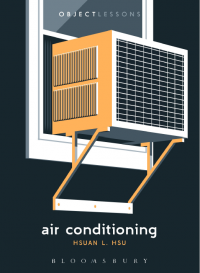
Hsuan Hsu’s Air Conditioning explores questions about culture, ethics, ecology, and social justice raised by the history and uneven distribution of climate controlling technologies.
This book chapter provides a transdisciplinary overview of the agents, agencies, and processes of change occurring in the Mozambican coast in the twentieth and twenty-first centuries, and their connection to international trends and global environmental concerns.
This book chapter argues that the actor-network approach is particularly suited for research in environmental history with its long-standing interest in more-than-human agency.