Hatmaker, Susie, "On Mattering: A Coal Ash Flood and the Limits of Environmental Knowledge"
Susie Hatmaker investigates the largest flood of coal ash in United States history in 2008 as an event at once monumental and insignificant.

A flooding in the Saint Petersburg metro divided the city into two parts for nearly a decade.
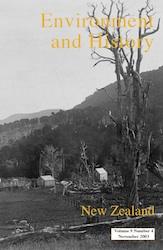
The history of environmental anxiety in nineteenth- and twentieth-century New Zealand can be traced by focusing on problems caused by deforestation.
The present investigation examines the resonance of such catastrophes in the correspondence network of the universal scholar Albrecht von Haller (1708–77).
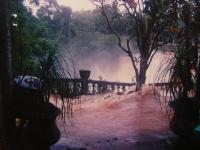
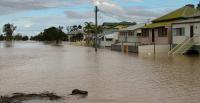
José Paronella’s dream continues at Paronella Park despite catastrophic flood and cyclonic events.
The paper addresses various ways that water is constructed as “dangerous,” whether because there is too much (floods), too little (droughts), or because it is polluted. Mauch emphasizes that although water catastrophes have a natural origin, their effects are primarily social.
The forest area in Switzerland has been expanding for more than one hundred years, after a long period of contraction culminating in an apparently accelerated phase of deforestation in the first half of the nineteenth century…
Different interpretations of the biblical deluge give us an idea of various modes of perceptions of natural disasters in the seventeenth and eighteenth centuries. In analysing these interpretations we learn much about early modern European ways of thinking about nature, mankind and the relationship between both.
Rivers need property rights so that humans can live with floods.
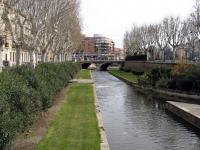
Late medieval efforts at river management to control floods in the county of Roussillon reveal environmental awareness and responsibility in an emerging state and also the grounds and strength of local resistance.