

Arcadia
An Unnatural History of Rocky Flats National Wildlife Refuge, Colorado
Exploring the cultural and environmental transformation of Rocky Flats from military industrial complex to protected habitat.
Exploring the cultural and environmental transformation of Rocky Flats from military industrial complex to protected habitat.
Nanotechnology can revolutionize the production of materials and offer ecological solutions but it may have unexpected consequences or lead to mismanagement.
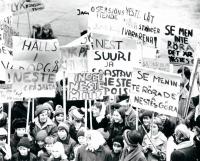
This article studies the “Neste war,” 1970–1972, the first major victory of the environmental movement in Finland.
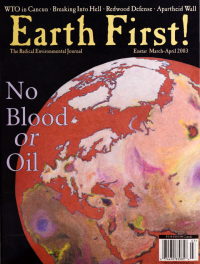
In Earth First! Journal 23, no. 3 Tim Ream reflects on human induced weather changes, Jade gives an update on the struggle against Chevron Texaco in Ecuador, and Samantha and Ryan Simmons analyze the environmental consequences of militarism.
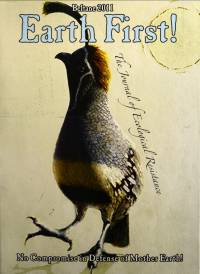
Earth First! Journal 31, no. 3 presents thoughts on jaguar recovery in the United States, ecocide and renewal in Iraq’s marshlands, South Florida forest defense work, and native land rights at Glen Cove.
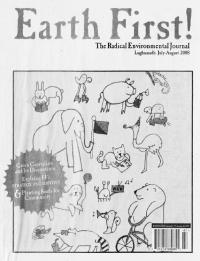
Earth First! 28, no. 5 looks at topics such as the legacies of race and colonialism, strategies for disrupting the Democratic and Republican National Conventions, and the shortcomings of “green” capitalism.
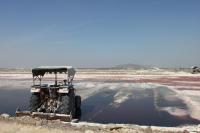
Across a century and a half, colonial, private and government salt farming at Sambhar has transformed the ecology of the lake and caused a slow cataclysm of pollution, affecting wildlife and livelihoods.

This is Chapter 5 of the exhibition “Rachel Carson’s Silent Spring: A book that changed the world” by historian Mark Stoll.
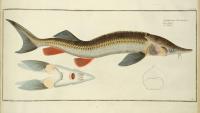
In this chapter of their virtual exhibition “‘Commanding, Sovereign Stream’: The Neva and the Viennese Danube in the History of Imperial Metropolitan Centers,” the authors describe fish resources in St. Petersburg and Vienna and their role in urban life from different perspectives. Fisheries constituted an important part of local economic activities and fishers—both poor professionals and wealthy leisure anglers—were very visible in the cities’ crowds, at their markets, and on the banks of their rivers and canals.