

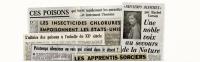
Exhibition chapter
Why Europe Responded Differently from the United States | Rachel Carson’s Silent Spring
This is Chapter 9 of the exhibition “Rachel Carson’s Silent Spring: A book that changed the world” by historian Mark Stoll.
This is Chapter 9 of the exhibition “Rachel Carson’s Silent Spring: A book that changed the world” by historian Mark Stoll.

This is Chapter 4 of the exhibition “Rachel Carson’s Silent Spring: A book that changed the world” by historian Mark Stoll.
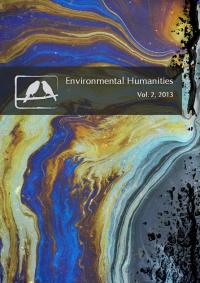
Walker focuses on uncertainty as a boundary device that shapes scientific ethos in crucial ways and negotiates a relationship between technical science and public deliberation.
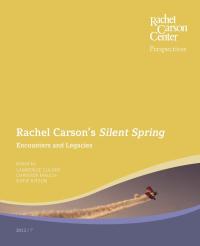
Lisa Sideris uses the unusually warm 2012 spring in Bloomington to highlight public complacency toward climate change, echoing themes from Silent Spring.
Rachel Carson testifying before the Senate Government Operations subcommitte.
Jenny Price critiques Rachel Carson’s Silent Spring for reinforcing a human–nature divide that shifted environmental responsibility onto individuals while obscuring systemic and institutional accountability.
Nancy Langston reinterprets Rachel Carson’s Silent Spring to argue that ecological and human health are inseparable, urging renewed responsibility toward chemical safety and environmental stewardship.
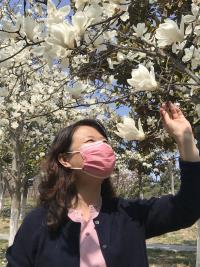
In “Another Silent Spring,” historian Donald Worster explains how human relations with other animals, wild and domestic, is at the core of a majority of epidemics.

A biography of American scientist and popular ecology writer, Rachel Carson.
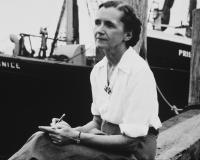
In “Another Silent Spring,” historian Donald Worster explains how human relations with other animals, wild and domestic, is at the core of a majority of epidemics.