


Multimedia | book profile
The Search for the Ultimate Sink: Urban Pollution in Historical Perspective
A collection of essays exploring the production and disposal of wastes in the American city since 1850.
A collection of essays exploring the production and disposal of wastes in the American city since 1850.

Time-defined oak wood segments and soil samples were used as a source of information on the cadmium and lead pollution process induced by the emissions that occurred from 1726 to 1840 around a Swedish alumworks.

An analysis of environmental policy in China with a focus on the regulation of water pollution.
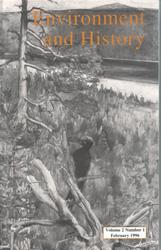
Wood scarcity at Lovers Alum Works (LAW) restricted the amount of alum produced during a large part of the period of activity (1723–1810s). During the shale fuel period (1810s–1877) the emissions of volatile substances such as cadmium and sulfur increased.

The attempts of Angus Smith and his colleagues to control alkali pollution after 1863 are usually seen as being a success…

In 1966, a stray beluga whale swimming up and down the polluted Lower Rhine caught the media’s attention in West Germany.
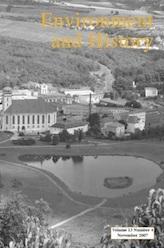
In this article Disco describes the repertoires developed by the municipal waterworks of two large Dutch cities, Amsterdam and Rotterdam. Two main repertoires are visible: 1) ‘coping’ by means of technical fixes and vigilance and 2) ‘transnational technopolitics’ aimed at institutionalising regulatory regimes to curb pollution.

Chronicles how industry developed a continental perspective in a shared regional space, the mineralized West, and how successful efforts of governments and citizens to protect the environment evolved.
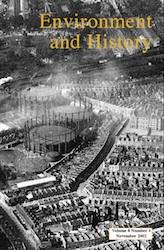
Studying the contents of each work shows which authors were merely copying the Greek theory of humours and miasma, and which made genuine contributions to the field.
The paper addresses various ways that water is constructed as “dangerous,” whether because there is too much (floods), too little (droughts), or because it is polluted. Mauch emphasizes that although water catastrophes have a natural origin, their effects are primarily social.